Here’s an overview of the Best Variable Frequency that we’ll explore today:
Variable frequency drives (VFDs) are critical for anyone looking to precisely control motor speed, protect equipment, and improve process efficiency in small workshops or hobbyist CNC setups. This comparison evaluates five consumer-available VFD and speed-control options spanning budget to premium, single- and three-phase input capabilities, and a mix of true VFDs versus simple speed controllers. Our methodology combined a close reading of technical specifications, common-use case scenarios, and practical considerations such as input/output compatibility, protection features, display and control ergonomics, and ease of setup. We also weigh industry-relevant constraints, like overload protection, anti-jamming capability, and whether external resistors are required or supported. The products covered are: Mollom VFD 2.2 kW, ZOWZEA 4000 W speed controller, Generic 750 W VFD, CavalliFun 120 V speed controller, and TKXEC 4000 W adjustable controller.
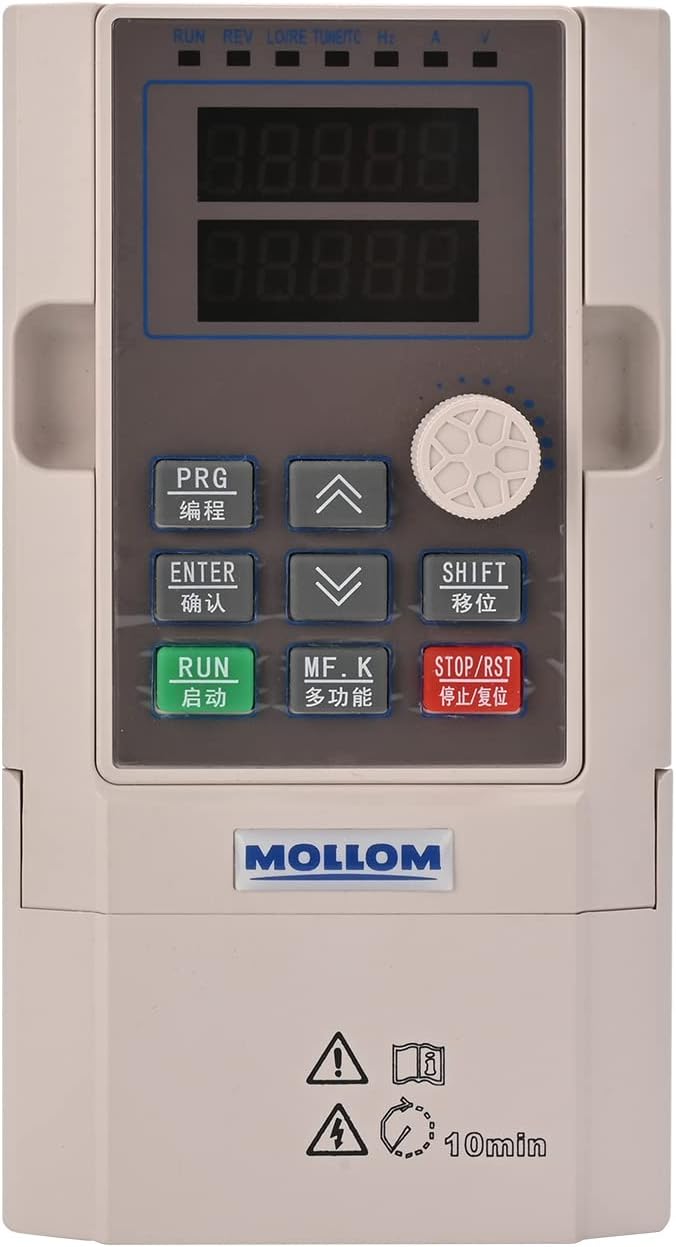
1. MOLLOM VFD 220V 2.2KW 3HP 9.6A 220V Single or Three Phase Input to 3 Phase 0-3000 Hz Output Variable Frequency Drive Control Inverter for Spindle Motor CNC Speed Control
- Brand: Mollom
- Manufacturer: Mollom
This Mollom VFD provides a true 2.2 kW rating with 0-3000 Hz output and flexible input (single or three-phase at 220 V). It includes a rich set of digital and analog control terminals, RS-485 Modbus communication, and an LCD/LED display with a detachable remote-capable interface. Its compact 3.5 x 4.5 x 6.5 inch enclosure and 2.2 lb weight make it approachable for compact CNC or router/spindle projects, while the strong anti-jamming capability and robust protection features support reliability in typical workshop environments.
In practice, this VFD shines for CNC spindle and precision-milling applications where a three-phase output is required from a single- or three-phase mains supply. The Modbus port enables integration with control panels or HMI systems, and the detachable display facilitates remote operation in cramped setups. However, users should note the warning about humid environments and avoid direct exposure to water mist or droplets, which can cause short circuits. The absence of external resistors means you must ensure your motor is within the recommended power range; heavy loads may require selecting a higher-power model to avoid overheating or stall conditions. Setup benefits from the user-friendly layout, but beginners should plan to consult the manual for input/output wiring nuances and correct motor synchronization.
Pros
- True 0-3000 Hz output for high-speed spindle control
- Supports both single- and three-phase 220V input with three-phase output
- RS-485 Modbus communication for integration
- Rich terminal array for flexible control and monitoring
- Compact footprint with detachable remote display
Cons
- Humidity exposure cautions limit use in damp environments
- Requires careful motor sizing to avoid underspec or overspec scenarios
- Not explicitly stated as plug-and-play for non-MODBUS control without adapters

2. AC Motor Variable Speed Controller 120V 15A 4000W with Overload Protection Switch
- Brand: ZOWZEA
- Manufacturer: ZOWZEA
ZOWZEA’s speed controller is a practical, high-power resistive/inductive load controller designed for 110-120 V mains. It handles up to 4000 W for resistive loads and 1500 W for inductive loads, with an overcurrent cutoff at 15 A and a compact form factor that includes a belt clip for mobility. The LED display helps users monitor real-time voltage, and the unit’s flame-retardant casing adds a layer of safety for typical workshop deployments.
This device excels for a simple, low-cost speed control of fans, small motors, soldering irons, and similar loads where a full VFD isn’t necessary. It’s particularly convenient for belt-worn operation on the go, which is helpful for tasks like field repairs or temporary rig setups. Still, it’s important to note that this is not a true VFD—the control is voltage-based rather than frequency-based—and performance will vary with load type. The maximum listed resistive load assumes ideal conditions; real-world inductive loads may hit the 1500 W limit sooner, and continuous operation near the rating could demand thermal management beyond what the flame-retardant shell provides.
Pros
- High resistive-load rating up to 4000 W
- Integrated LED display for voltage monitoring
- Lightweight and belt-clip portable design
- Overload protection provides a safety cutoff
- Simple, intuitive knob-based control
Cons
- Not a true VFD (voltage control rather than frequency control)
- Lower inductive-load capability (1500 W) compared to resistive rating
- Limited protection features beyond overload

3. Generic 750W 1HP VFD
- Brand: Generic
- Manufacturer: Generic
This Generic 750 W VFD provides a single-phase input and three-phase output, enabling small machines to run on three-phase power from a common 110-220 V supply. It includes protection features like overload and over-temperature protection and is housed in a flame-retardant ABS shell, which helps safety in typical shop environments. The device is positioned as a versatile converter for spindle motors, CNC components, HVAC equipment, pumps, and fans, making it a modular option for compact setups.
In practice, its 750 W rating means it’s best suited for lighter workloads or hobbyist CNC machines rather than industrial-scale equipment. The product’s simple external port programming facilitates straightforward setup, but users must ensure motor power does not exceed twice the VFD’s rating (i.e., roughly 1.5 kW for a 0.75 kW drive). While the unit offers multiple protections and a durable case, the documentation doesn’t clearly specify advanced features like built-in braking or detailed ramp/acceleration controls, which may matter for precision machining. For builders migrating from single-phase to three-phase setups, this model provides an economical entry point with reasonable protection and ease of use.
Pros
- Single-phase to three-phase conversion in a compact form
- Under 1 kW rating suitable for small machines
- Overload and over-temperature protections
- Flame-retardant ABS housing for safety
- Simple external programming interface
Cons
- Limited 750 W power may constrain larger spindle/miller tasks
- Documentation lacks detail on advanced controls
- No explicit braking or dynamic performance features

4. AC Motor Speed Controller 120V 15A Variable Speed Controller
- Brand: CavalliFun
- Manufacturer: CavalliFun
CavalliFun’s unit targets resistive loads with a 2000 W maximum for resistive and 1000 W for inductive loads, using a 120 V supply and a 15 A max current rating. It includes an independent overload/shutoff switch, surge protection, and an LED voltage display for real-time monitoring. Its belt-clip form factor and broad compatibility with devices like fans, heaters, drills, and grinders make it a handy accessory for quick on/off control and speed adjustments in simple projects.
In real-world use, users should treat this as a dedicated resistive-load controller rather than a general purpose VFD. It’s ideal for tasks where motor regulation is primarily for airflow or heat rather than precise spindle speed control. The device explicitly excludes DC motors, induction motors, routers, or devices with circuit boards, which limits its applicability for more complex machinery. While the protection features are robust for a basic unit, the lack of true frequency control means it won’t deliver the torque management or soft-start characteristics that VFDs provide for CNC or milling applications.
Pros
- LED voltage display for straightforward monitoring
- Clip-on design for portable use
- Overload and short-circuit protection
- Reasonable price for resistive-load control
- Compact footprint with versatile device compatibility
Cons
- Resistive-load only; not suitable for motors requiring frequency control
- Limited to 2000 W resistive and 1000 W inductive loads
- Not compatible with DC motors or circuit-boarded devices
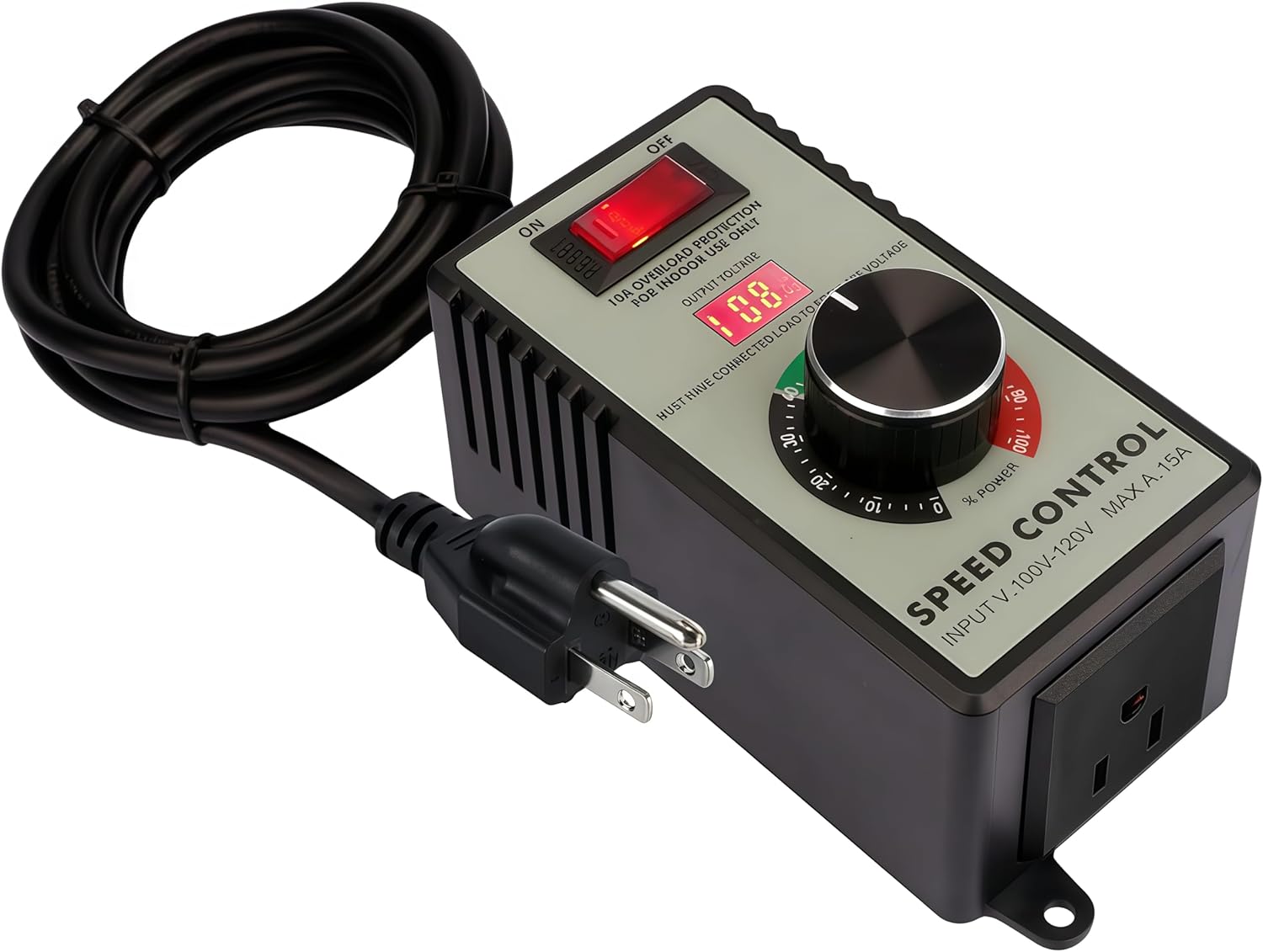
5. Adjustabe 4000W AC 110v Motor Speed Controller Angle Grinder
- Brand: TKXEC
- Manufacturer: TKXEC
TKXEC’s budget option offers a high maximum load of 4000 W, with a 15 A maximum current and a rated 9 A. It is designed for universal compatibility with American-type A/B plugs and features an adjustable voltage via a precision knob for step or continuous speed control. The unit claims broad applicability for tools like angle grinders, marble machines, blowers, and more, but explicitly warns that devices with circuit boards or capacitors inside may not be compatible.
In practice, this controller is best for quick, inexpensive speed adjustment on simple, brushed motors where frequency control isn’t required. Users should be mindful that low-voltage operation can occur if the load is not matched correctly, and the device’s performance can vary with load type. For occasional use in DIY projects or light fabrication, the TKXEC unit offers exceptional value. However, it’s not suitable for precise spindle control or applications requiring torque stabilization or soft-start features, which a true VFD would provide. It also lacks explicit over-temperature protection details and relies on overload protection for safety.
Pros
- Very low price for high maximum load (4000 W)
- Adjustable speed with a precise control knob
- Wide compatibility with common A/B plugs
- Compact and lightweight for easy placement
- Overload protection enhances safety
Cons
- Not a true VFD; no frequency control
- Potential voltage instability with mismatched loads
- Limited protection details beyond overload
Frequently Asked Questions
We’ve compiled answers to the most common questions about variable frequencys to help you make an informed decision.
Conclusion
This comparison showcases a range of options from true, feature-rich VFDs suited for CNC and precise motor control to accessible, budget-friendly controllers for simple speed adjustments.
For users prioritizing performance, reliability, and integration, the Mollom VFD stands out in the premium segment.
For cost-conscious hobbyists and light-duty tasks, the TKXEC or CavalliFun options offer strong value, provided users temper expectations around motor control capabilities. Always align the device’s power rating with the motor’s full-load current and ensure proper environmental protection to maximize longevity..