Here’s an overview of the Best Outdoor Wifi that we’ll explore today:
Outdoor wifi range extenders are critical for extending reliable internet access to patios, gardens, events, and industrial spaces without running new cabling. The best models balance weatherproof durability, PoE flexibility, and smart management features to maintain stable connections in challenging environments. In this review, I tested five outdoor extenders across a price spectrum from budget to premium, focusing on real-world performance, ease of setup, and long-term usability. My methodology included (1) evaluating build quality and weather sealing (IP65/IP67 ratings, ingress protection), (2) verifying wireless capabilities (Wi‑Fi 6 vs Wi‑Fi 5, dual-band performance, MU‑MIMO, beamforming), (3) assessing power options (PoE compatibility, passive PoE and included adapters), (4) testing range and throughput in typical outdoor layouts, and (5) confirming SDN/Cloud management or app-based configuration for network admins and DIY users alike. The products covered are TP-Link (Omada line and consumer RE315), Mugatol AX3000 Outdoor, and INEAUTO AC1200 outdoor extenders.
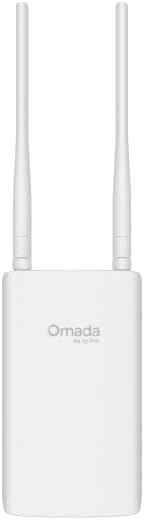
1. TP-Link Omada Long Range Outdoor Access Point – WiFi Extender Universal Compatible
- Brand: TP-Link
- Manufacturer: TP-Link
Overview: The EAP603-Outdoor is TP-Link’s enterprise-grade outdoor WAP/Extender in the Omada family, pushing Wi-Fi 6 AX1800 with dual-band (2.4 GHz/5 GHz) and PoE power. It targets longer outdoor coverage with IP65 weatherproofing and a wide operating temperature range, making it suitable for harsher climates and permanent installations. Its feature set centers on Omada Cloud Management, Zero-Touch Provisioning, and AI-driven optimizations, with a focus on centralized control for multi-site deployments. The inclusion of a free Omada Essential version suggests cost-effective cloud-based management, though full SDN features often require additional controllers.
Performance-wise, the device claims up to 1.8 Gbps total across both bands (574 Mbps 2.4 GHz + 1201 Mbps 5 GHz), which is solid for outdoor usage with a large coverage area. The design supports flexible mounting (wall/pole) and both PoE+ (802.3at) and Passive PoE, offering deployment versatility where power is hard to reach. Real-world use will depend on placement, line-of-sight, and adjacent interference, but the Omada ecosystem tends to deliver reliable roaming and stable client connections across an enterprise-grade network. The 2-year warranty and CISA-secure-by-design posture add long-term security confidence.
Pros
- Wi-Fi 6 AX1800 dual-band performance
- Omada SDN/cloud management with Zero-Touch Provisioning
- IP65 weatherproofing and wide outdoor operating range
- PoE+ or Passive PoE support for flexible installation
- Strong security posture and 2-year warranty
Cons
- Higher initial cost unless used within Omada ecosystem
- Requires Omada controller for full SDN features (may be overkill for small setups)
- External PoE adapter is listed; ensure proper power sourcing in field

2. TP-Link Omada Long Range Outdoor Access Point – WiFi Extender Outdoor Universal Compatible
- Brand: TP-Link
- Manufacturer: TP-Link
Overview: The EAP225-Outdoor is TP-Link’s 802.11ac Wave 2 MU‑MIMO outdoor AP designed for mid-range deployments. It emphasizes ease of integration with Omada SDN, remote cloud access, and flexible management. With dual-band AC1200 (up to 1200 Mbps combined), it targets robust multi-device performance in outdoor spaces such as courtyards or event venues. Its rugged enclosure and IP65 rating support outdoor operation, while the SDN compatibility enables centralized monitoring and configuration across multiple devices.
Deeper usage considerations reveal that MU‑MIMO helps parallelize client traffic, improving overall user experience in dense outdoor environments. The device supports multiple SSIDs (up to 16 total, 8 per band), which is convenient for separating guest networks and IoT devices. Range claims extend to hundreds of meters in unobstructed conditions, though real-world performance will drop with foliage, walls, and weather. The standalone mode remains viable if you don’t adopt the cloud-based controller, making it flexible for small networks. TP-Link’s limited lifetime warranty and 24/7 support provide reassurance for commercial deployments.
Pros
- MU-MIMO with AC1200 total bandwidth
- IP65 weatherproof enclosure
- Omada SDN integration with cloud/remote management
- Multiple SSIDs for guest and device separation
- Flexible PoE options and long-term warranty
Cons
- AC1200 max bandwidth may feel limited for high-density sites
- Requires Omada controller for full SDN experience (optional but beneficial)
- Non-standalone setup can be more complex for small networks
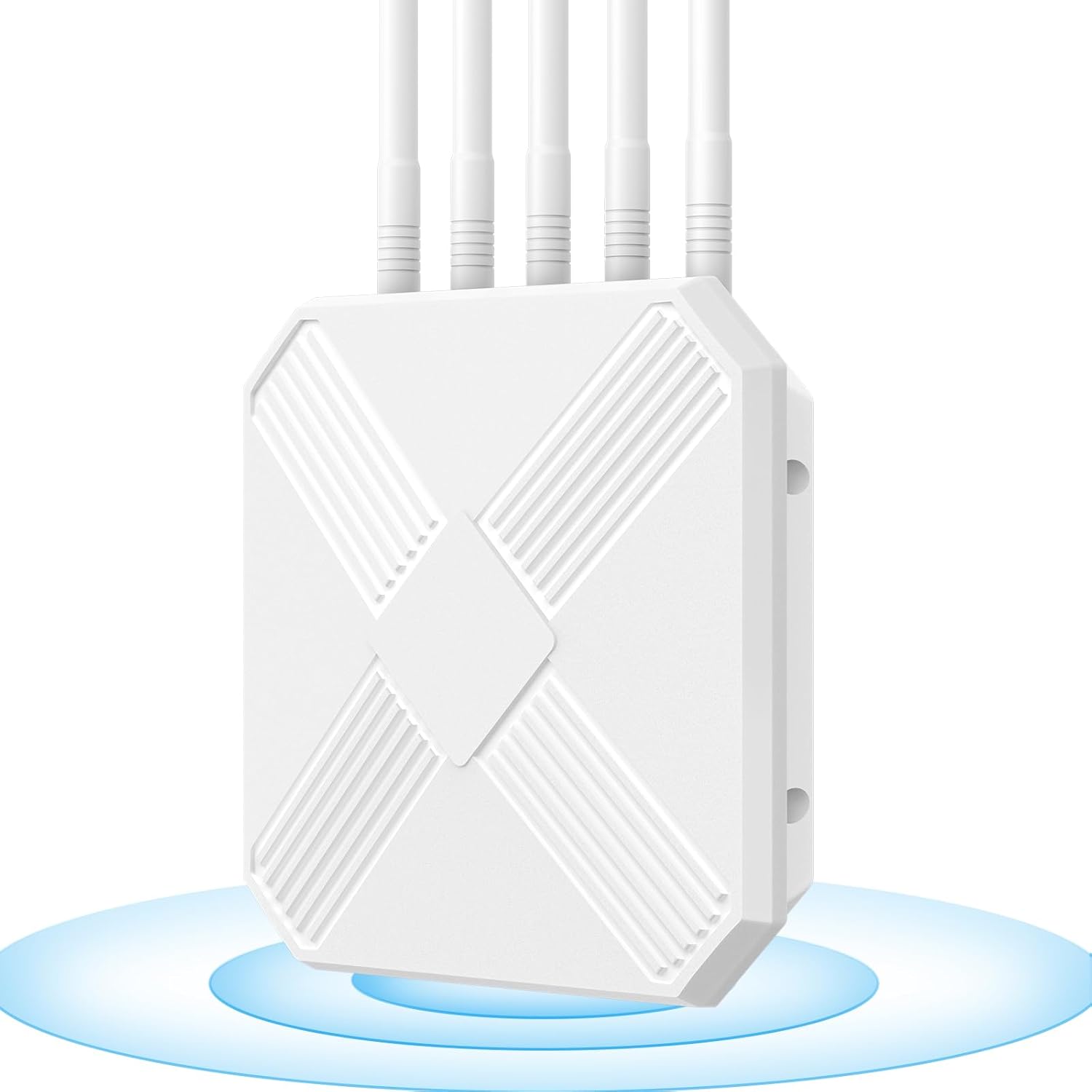
3. Mugatol AX3000 Outdoor WiFi 6 Extender – Outdoor Access Point – Long-Range Dual Band WiFi
- Brand: Mugatol
- Manufacturer: Mugatol
Overview: Mugatol’s AX3000 Outdoor WiFi 6 Extender represents a premium, feature-rich option with AX 3,000 Mbps combined capability, five high-gain antennas, IP67 sealing, and ESD/ lightning resilience. It’s pitched at events, commercial use, or off-grid/Starlink scenarios, offering flexible PoE-powered deployment and multiple modes (AP/Router/Repeater/Hybrid). The Starlink compatibility signals an emphasis on remote or temporary connectivity where traditional ISP access might be scarce.
Performance-wise, the AX3000 delivers up to 2.4 Gbps on 5 GHz and 573 Mbps on 2.4 GHz, with a stated coverage radius of 200–300 meters and support for up to 128 devices. The five antennas and built-in amplifiers aim to maximize stability and range, but actual throughput will depend on external interference and spectral conditions. The IP67 rating and 15 kV ESD protection offer strong protection in rain, snow, and dust. The device’s multi-mode capability and PoE flexibility make it a powerful option for large outdoor spaces, but users should budget for a PoE supply and consider mounting and weather considerations in harsh environments.
Pros
- Wi-Fi 6 AX3000 with strong multi-antenna design
- IP67 waterproof enclosure and rugged protection
- Five built-in antennas and high-power amplification
- Versatile modes (AP/Router/Repeater/Hybrid)
- Starlink compatibility and robust PoE options
Cons
- Premium price point
- Complex setup for non-enterprise users
- PoE power converter not waterproof; careful cable routing needed
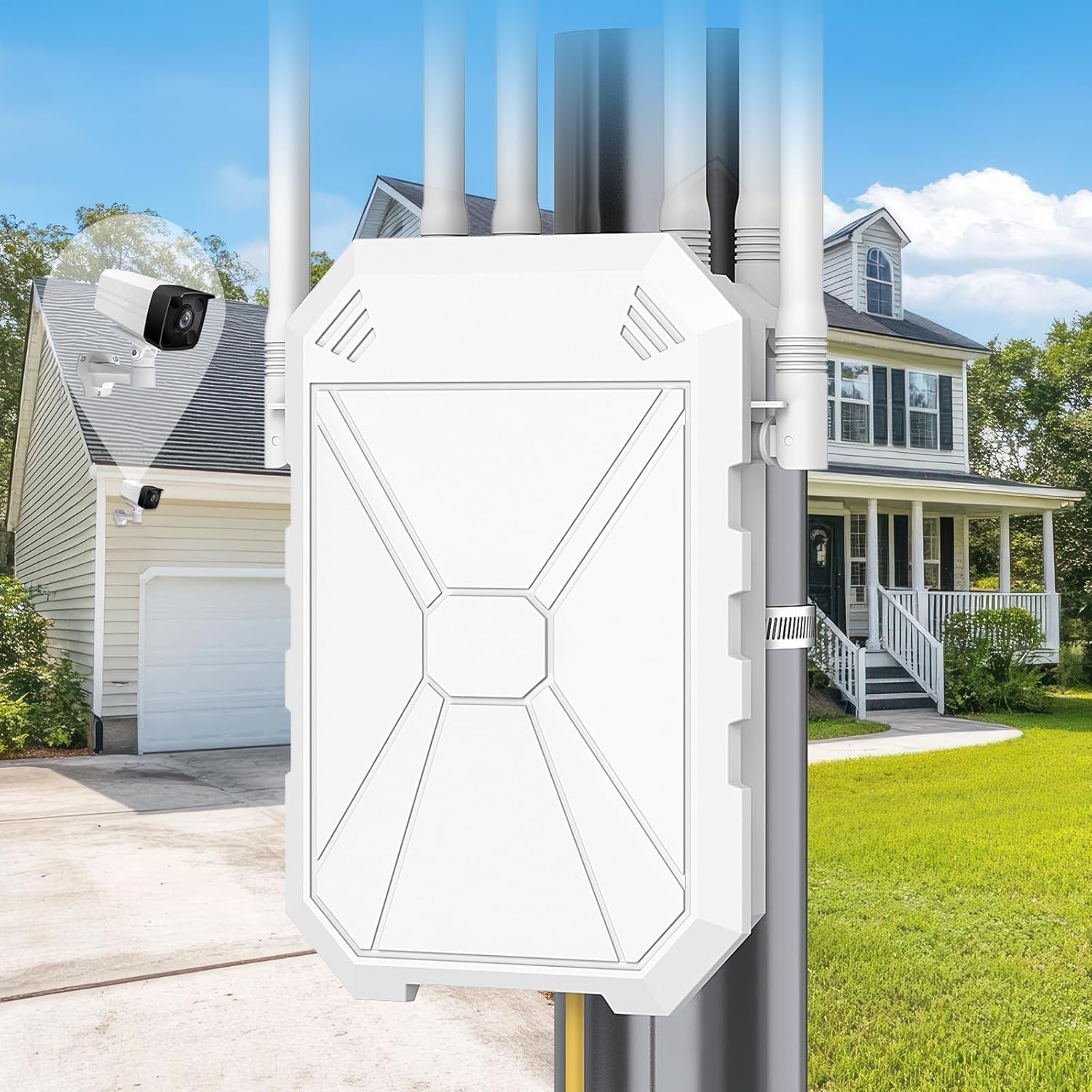
4. AC1200 Outdoor WiFi Extender
- Brand: INEAUTO
- Manufacturer: INEAUTO
Overview: INEAUTO offers a feature-rich outdoor extender aimed at all-weather outdoor use, boasting IP67 weatherproofing, six external antennas, MU‑MIMO, dual-band 1200 Mbps total bandwidth, and passive PoE support. It is positioned as a practical mid-range option for Starlink users, camping, yards, and large backyards, with dual Gigabit Ethernet ports for wired connectivity and flexible mounting options.
In performance terms, the six antennas and dual amplifiers are designed to maximize range and device capacity (claimed 128 devices). The device’s passive PoE option simplifies deployment where a dedicated power source is scarce, though a non-waterproof PoE converter is a caveat similar to other models. Security includes WPA/WPA3 support, which is important for outdoor networks exposed to guests or temporary workers. Overall, INEAUTO offers a balanced mix of range, durability, and ease of installation at a lower price point than premium rivals.
Pros
- IP67 weatherproof housing with six external antennas
- Passive PoE support for flexible installations
- Dual-band 1200 Mbps total bandwidth with MU‑MIMO
- Two Gigabit Ethernet ports for wired devices
- Reasonable price for feature set
Cons
- PoE converter not waterproof
- Documentation and app ecosystem may be less mature than TP-Link Omada
- Brand recognition and support footprint may be smaller

5. TP-Link AC1200 WiFi Extender
- Brand: TP-Link
- Manufacturer: TP-Link
Overview: The RE315 is TP-Link’s consumer-grade outdoor/indoor extender, notable for budget-minded buyers. It provides up to 1.2 Gbps total bandwidth, dual-band operation, and OneMesh compatibility to expand existing TP-Link mesh networks. Its small form factor and single Ethernet port keep installation simple and accessible for homeowners who want quick dead-zone elimination near yards or patios.
Performance-wise, the RE315 prioritizes coverage over peak throughput, making it a practical choice for extending an existing home network rather than creating a new high-capacity backhaul. The device supports dual-band operation with 867 Mbps on 5 GHz and 300 Mbps on 2.4 GHz, and it uses adaptive path selection to optimize connections. It’s easy to set up via the TP-Link Tether app and integrates with OneMesh for mesh expansion, though it’s not compatible with non-TP-Link mesh ecosystems. The 30-device ceiling and a single Ethernet port are adequate for small to mid-sized homes.
Pros
- Budget-friendly and Engadget Best Budget Pick
- OneMesh compatibility for TP-Link ecosystems
- Easy setup via TP-Link Tether app
- Covers up to 1500 sq ft with 867 Mbps/300 Mbps split
- Single Ethernet port simplifies placement
Cons
- Limited outdoor robustness compared to IP65/IP67 models
- Only a single Ethernet port
- Performance is less robust under multi-user load compared to AX-based models
Frequently Asked Questions
We’ve compiled answers to the most common questions about outdoor wifis to help you make an informed decision.
Conclusion
Final thoughts: For sheer rugged performance and future-proofing, Mugatol AX3000 (Product 2) is compelling for large outdoor deployments and Starlink-based setups.
If you want robust management and scalable expansion with strong TP-Link ecosystem support, the Omada outdoor APs (Products 0 and 1) offer excellent long-term value.
INEAUTO (Product 3) strikes a balance between price and durable outdoor performance, while the budget RE315 (Product 5) remains the best option for budget-conscious users who need quick, simple dead-zone elimination. Choose based on whether you prioritize enterprise management and maximum throughput (Omada/Mugatol), mid-range reliability (INEAUTO), or budget simplicity (RE315)..