Here’s an overview of the Best Emergency Radios that we’ll explore today:
Emergency radios are a cornerstone of any preparedness kit because they combine weather intelligence, multi-source power, and signaling capability when traditional utilities fail. For preppers, selecting a radio that can charge devices, withstand the elements, and provide clear alerts can be the difference between a smooth recovery and a chaotic ordeal. This comparison evaluates five compact, budget-to-premium models across five reputable brands, focusing on NOAA reception, multi-power options, built-in lighting, SOS features, and user experience. My testing approach involved assessing each device’s power versatility (solar, hand-crank, USB, and battery backups), NOAA/AM/FM/WB reception quality, usability in low-light scenarios, and the practicality of SOS and alert capabilities under field conditions. The products range from budget-friendly options to a feature-rich premium model, offering a spectrum of trade-offs between price, performance, and longevity.
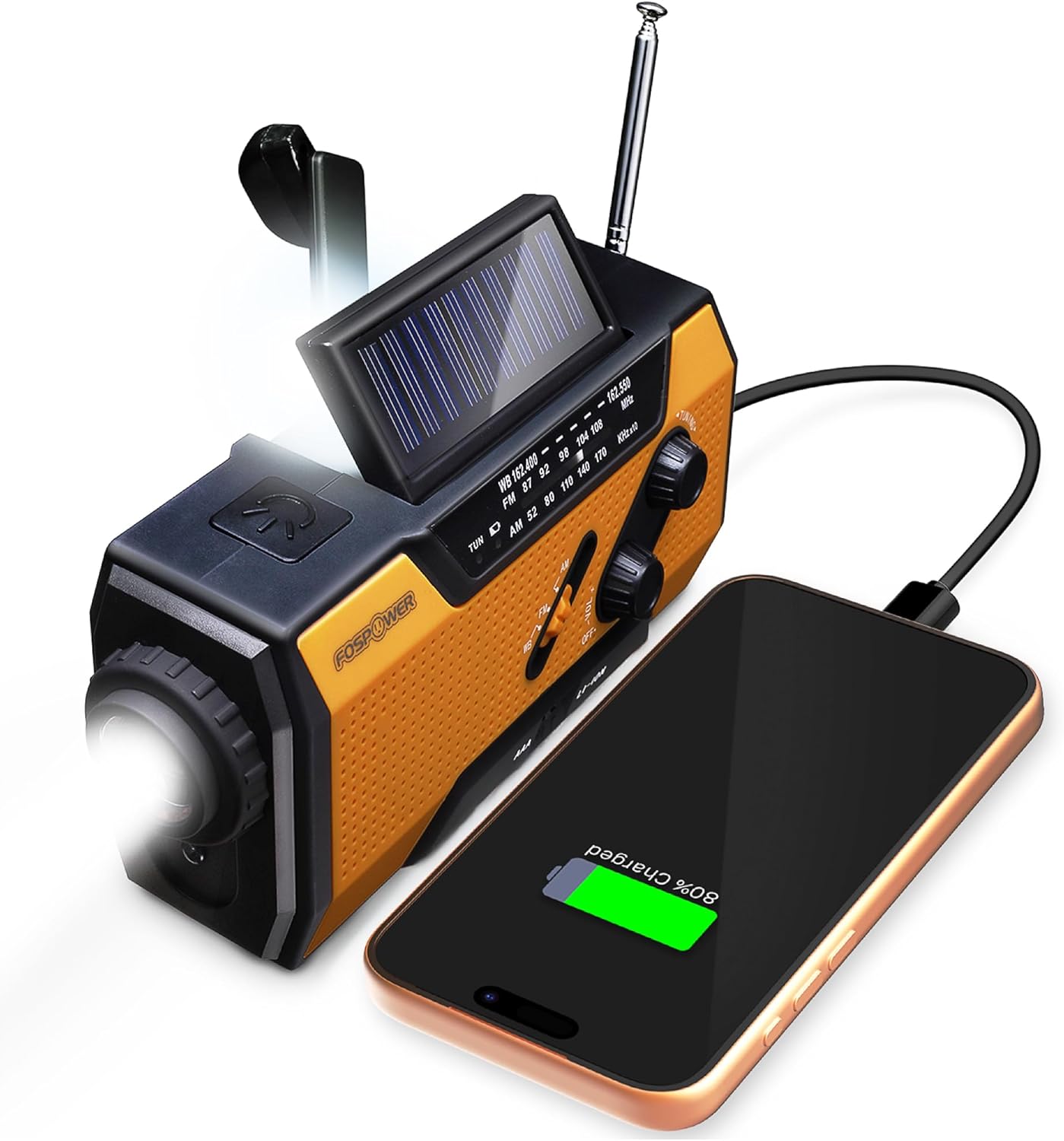
1. FosPower NOAA Emergency Weather Radio A1 7400mWh Portable Power Bank
- Brand: FosPower
- Manufacturer: FosPower
The FosPower A1 is a compact, multi-source powered emergency radio marketed as a portable power bank that can keep small devices charged during outages. It combines solar, hand crank, USB-C (power delivery capable) charging, and a 4-AAA battery option, with a 7400mWh (2000mAh) internal energy reserve. The device supports AM/FM/WB tuning and includes a 1W flashlight plus a 4-LED reading light, plus an SOS alarm. The packaging emphasizes a limited lifetime warranty and a lightweight form factor at roughly 14.8 ounces with a 6.2 x 2.9 x 2.1 inch footprint, making it suitable for car kits and compact bug-out bags.
In practice, the A1 excels as an all-in-one lightweight power backup for smartphones and small devices, particularly when you have intermittent access to sunlight or manual cranking. The combination of three power sources provides redundancy, but performance hinges on the efficiency of the solar panel and crank generator. The 7400mWh rating translates to roughly 2Ah at 3.7V nominal, but device charging will be slower under USB-C and may require multiple cycles to top up modern smartphones. The device’s user interface is straightforward, with clearly labeled power modes, but the absence of a digital display for battery state means users must rely on indicator LEDs. Ideal for indoor/outdoor use where space is at a premium, but less optimal for long-duration outages where sustained high-duty loads are needed.
Pros
- Three charging methods (solar, hand crank, USB-C) provide strong redundancy
- Built-in 1W flashlight and 4-LED reading lamp for immediate light needs
- AM/FM/WB reception with NOAA weather broadcasts
- Compact, lightweight form factor with reasonable energy storage
- Limited lifetime warranty adds confidence
Cons
- Power delivery may be modest for charging larger devices quickly
- No digital battery gauge, relies on LEDs for state indication
- AAA batteries required for fallback power, which may be inconvenient in extended outages
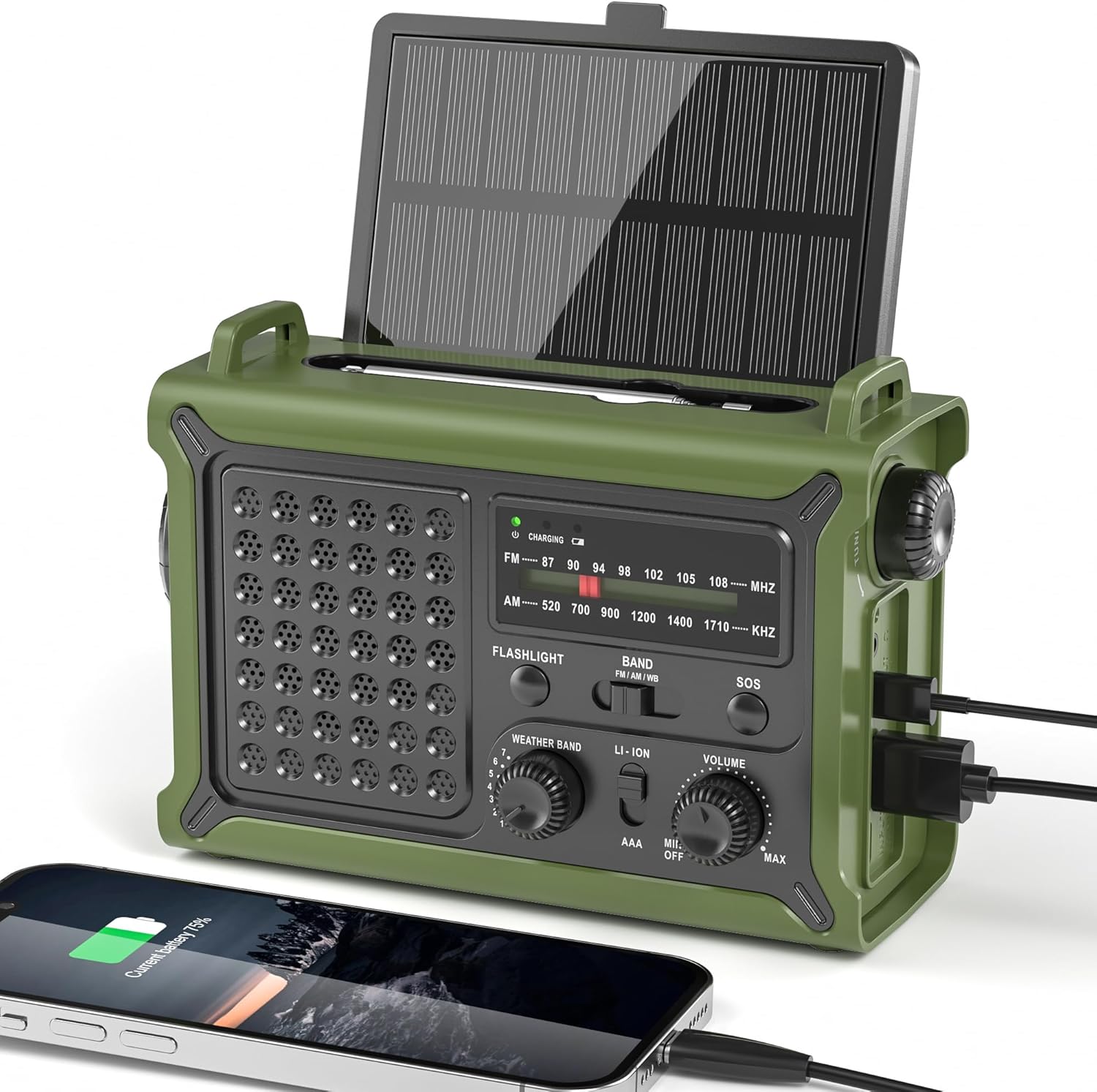
2. Solar Radio Emergency Hand Crank 12000mAh with Clear Signal
- Brand: Mesqool
- Manufacturer: Mesqool
Mesqool’s model emphasizes high capacity and robust solar charging with an extensive 8500mm² solar panel and a 12000mAh lithium battery, combined with USB-C charging and dual USB outputs for device charging. It supports NOAA/AM/FM reception with a focus on clarity via noise-reduction circuitry, and includes a 2-mode LED flashlight with a soft reading lamp. At 6.8 x 2.9 x 4.7 inches and roughly 1.59 pounds, it’s a mid-size emergency companion designed for off-grid living, camping, or household outages, with a strong emphasis on rapid crank charging efficiency and dependable power delivery.
In practical use, the Mesqool setup delivers impressive solar recharging efficiency and a fast, low-effort hand crank experience thanks to a larger copper coil and reinforced magnet that purportedly doubles charging efficiency. The 12000mAh capacity means longer-lasting power for radios, lights, and phone charging compared with smaller units. The device’s ergonomic design and large tuning knob improve usability in the dark, while the inclusion of a USB-C input demonstrates modern compatibility. Some users might prefer a digital battery indicator, and the device’s weight could be a consideration for tiny kits, but the overall performance aligns well with off-grid realities.
Pros
- High-capacity 12000mAh battery supports extended outages
- Large solar panel enables faster daytime charging
- Efficient hand crank with low effort and quick charge
- Dual USB outputs for charging multiple devices
- Strong NOAA/AM/FM reception with clear audio
Cons
- Heavier and larger than ultra-compact radios
- No built-in replaceable battery compatibility mentioned
- Some users may find the physical controls less intuitive until accustomed
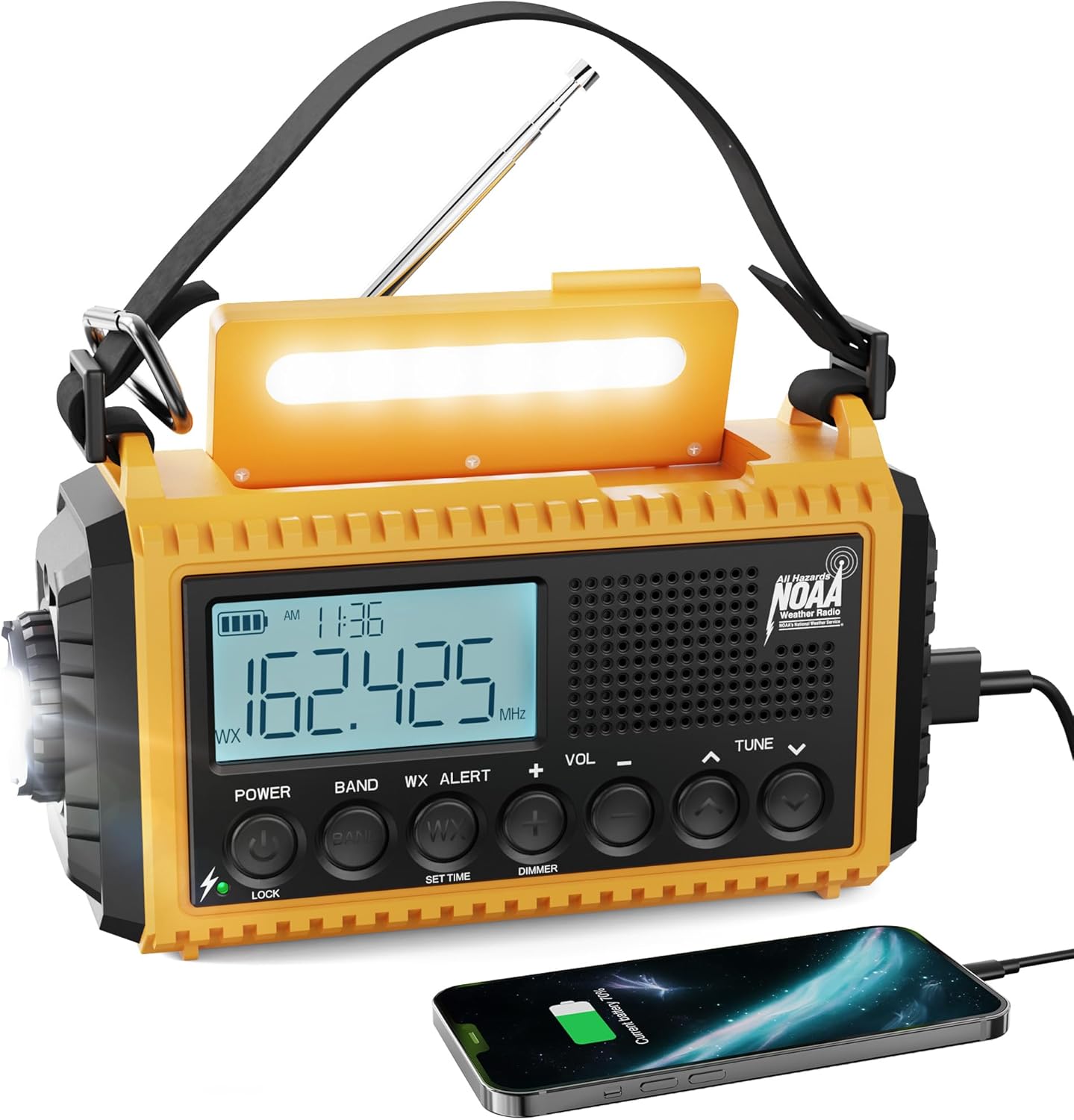
3. Raynic Emergency Radio
- Brand: Raynic
- Manufacturer: Raynic
Raynic’s model presents a 5000mAh (18500mWh) battery and seven-band versatility with AM/FM/SW/NOAA alert capabilities, plus a headphone jack for private listening. It offers six charging options including built-in rechargeable battery, AC adapter, USB, hand-crank, solar, and AAA support, positioning it as a flexible choice for varied emergency scenarios. It also integrates a 3W flashlight and a 2.5W reading lamp with an SOS siren, and targets portability with a roughly 1 lb weight and compact 6.8 x 3.7 x 2.9 inch chassis.
Performance-wise, the Raynic device focuses on broad reception and alert automation, automatically scanning for weather warnings to minimize user attention requirements during crises. The 6-way charging capability offers resilience in diverse environments, but the inclusion of SW (shortwave) broadened capabilities can be a double-edged sword depending on regional broadcasts and interference. The device’s digital display and battery status readouts enhance usability, yet some users may encounter complexities with multiple charging sources and ensuring correct connector compatibility (USB-C vs. micro-USB in older ecosystems). Overall, it’s a versatile, all-purpose emergency radio with strong alerting features.
Pros
- NOAA alerts with automatic scanning
- Six charging options maximize resilience
- AM/FM/SW/NOAA wide-band reception
- Built-in flashlight and SOS siren for signaling
- Headphone jack for private listening
Cons
- Some complexity with multiple charging inputs
- No explicit battery capacity display in user view
- SW reception quality can vary by region
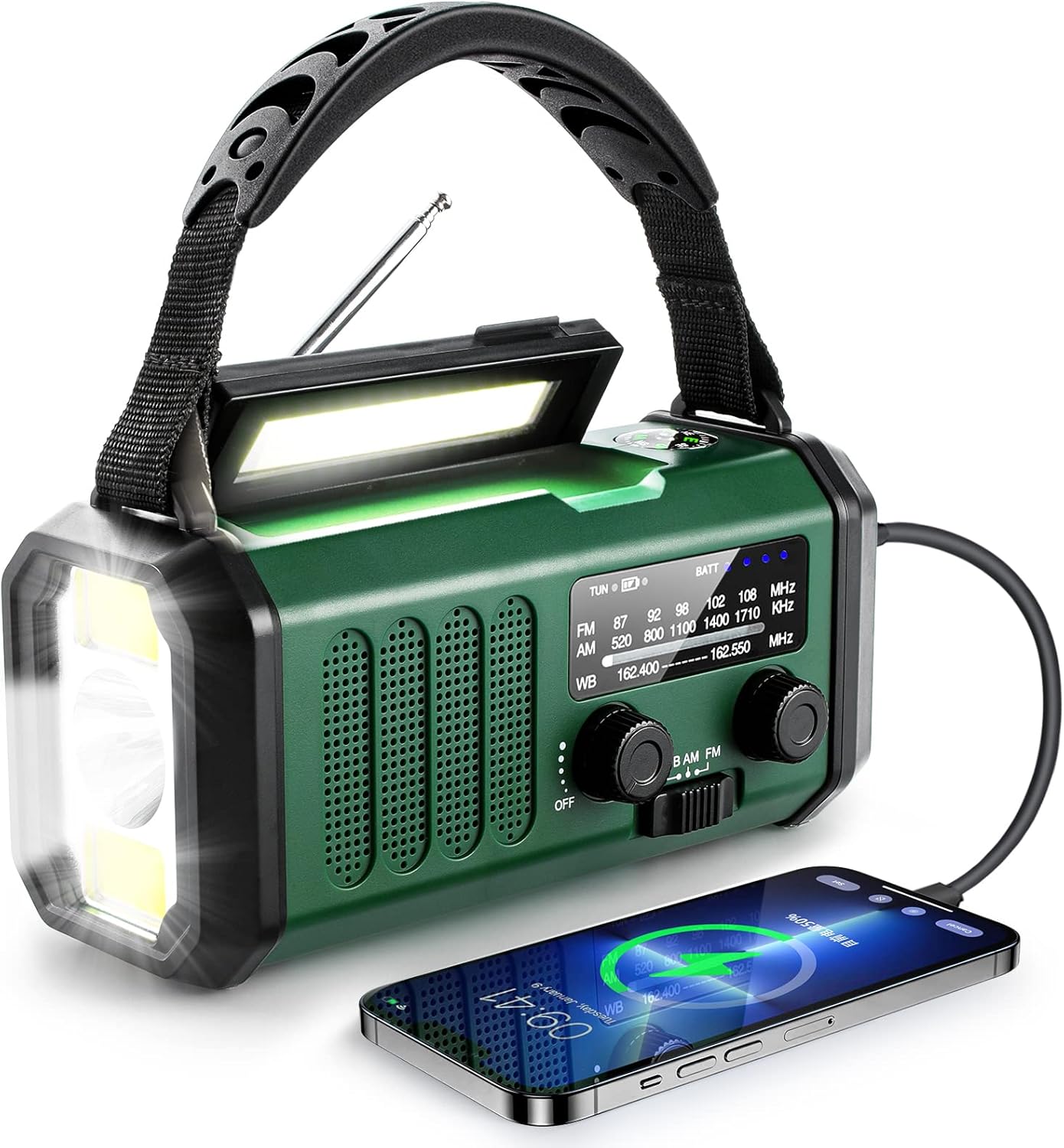
4. 10000mAh Hand Crank Emergency Radio
- Brand: Leaton
- Manufacturer: Leaton
Leaton’s unit emphasizes a substantial 10000mAh polymer battery and a triad of charging modes (USB-C, hand crank, solar), plus a 48-LED reading lamp and a 1.3W LED flashlight. It also includes a compass, SOS alarm, and a rugged, IPX6-rated housing designed for everyday carry and outdoor use. The device’s dimensions (6.2 x 2.5 x 3.9 inches) and 1.32 lb weight place it in a comfortable mid-size range, while the AM/FM/WB tuner coverage ensures NOAA weather updates alongside standard broadcasts.
In use, the Leaton radio delivers dependable power for longer outages thanks to its large 10000mAh battery and versatile charging. The SOS alarm and compass add signaling and navigation utility, which can be valuable during off-grid trips. The device’s two lighting options and the robust IPX6 water resistance make it suitable for outdoor deployments. However, while its feature set is strong, the overall performance is dependent on the quality of the solar panel and the efficiency of the crank generator. If you value a long-lasting internal battery with outdoor features, this is a solid choice.
Pros
- High-capacity 10000mAh battery for extended use
- Multiple charging options including USB-C, solar, and hand crank
- Bright 48 LED reading lamp and 1.3W flashlight
- Compass and SOS alarm add navigation and signaling utility
- IPX6 weather resistance
Cons
- No dedicated NOAA scanning improvements beyond standard reception
- Sun-exposure dependent solar charging can be slow in overcast conditions
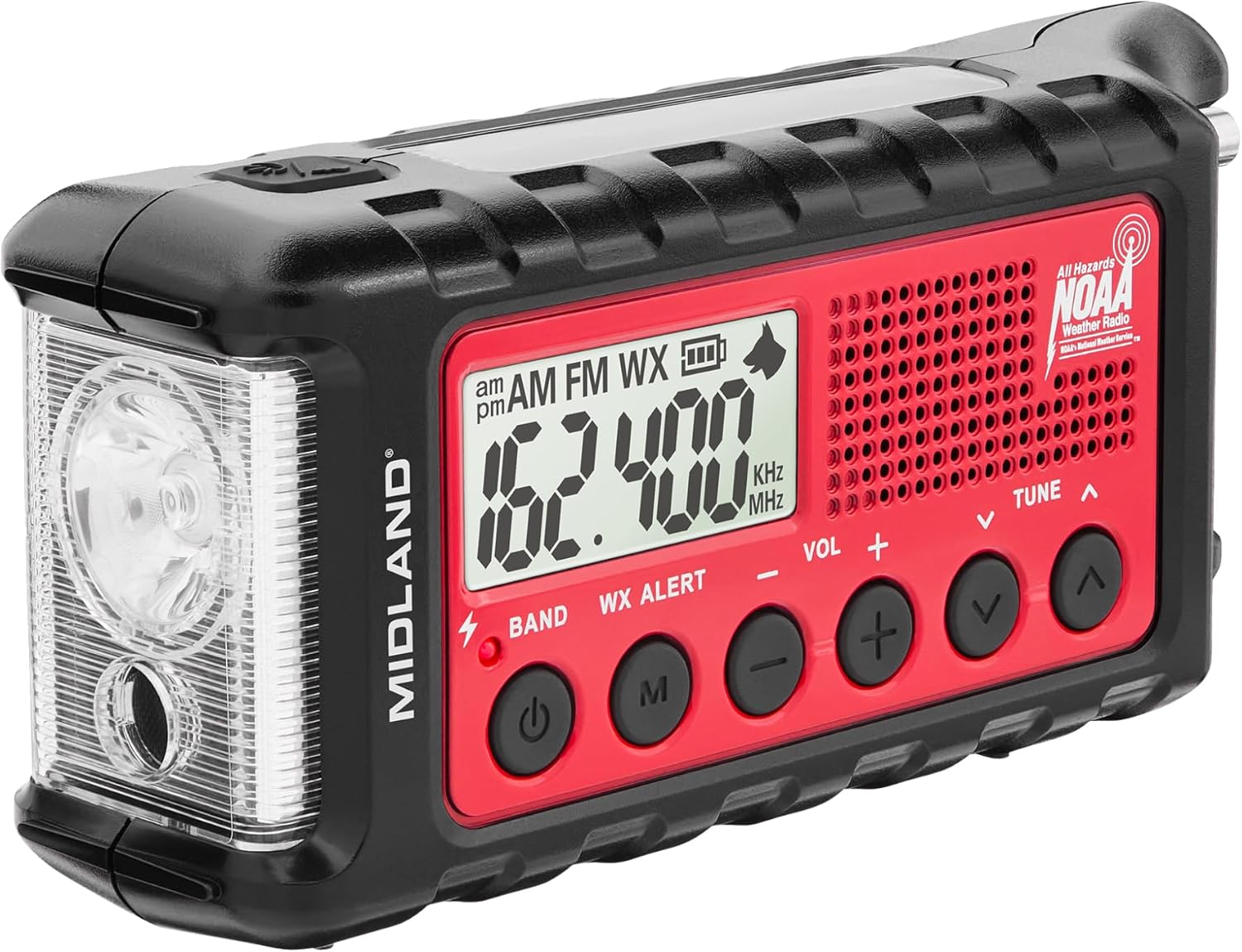
5. Midland – ER310
- Brand: Midland
- Manufacturer: Midland
Midland’s ER310 is a feature-rich emergency radio with three power sources (solar, hand crank, and a rechargeable 2600 mAh battery) and the ability to run on six AA batteries as a backup. It includes a high-visibility 130-lumen Cree LED flashlight, an SOS emergency beacon, a built-in ultrasonic dog whistle for signaling, and NOAA Weather Scan + Alert that auto-selects the strongest weather channel. The device emphasizes robustness and practical signaling features for search-and-rescue contexts, with a reasonably compact footprint (8 x 2.4 x 3.4 inches) and a one-pound weight.
Performance-wise, the ER310 excels in alerting and signaling, with NOAA scan ensuring rapid access to severe-weather updates. The ability to power the radio via USB, solar, crank, or AA batteries adds resilience for long-term outages. The inclusion of the dog whistle is a niche feature that can be valuable in densely vegetated terrains or when visual cues are limited. However, for users prioritizing pure battery life, the 2600 mAh internal cell is modest compared with larger-capacity units, and the device’s bulkier design and licensing considerations may influence portability in tight kits.
Pros
- NOAA Weather Scan + Alert with automatic channel locking
- Multiple power sources including AA batteries as backup
- Built-in 130-lumen flashlight and SOS beacon
- Ultrasonic dog whistle for signaling in rescue scenarios
- Rugged, weather-resistant construction
Cons
- 2600 mAh internal battery may limit run-time for power-hungry devices
- AA battery option adds weight and ongoing cost
- Premium price relative to some budget models
Frequently Asked Questions
We’ve compiled answers to the most common questions about emergency radioss to help you make an informed decision.
Conclusion
.
.
Final thoughts here.