Here’s an overview of the Best Wifi Extender that we’ll explore today:
As Starlink deployments become more common in homes, farms, RVs, and remote offices, a reliable, scalable wifi extension solution is essential. The best extenders not only broaden coverage but maintain stable speeds, support multiple devices, and offer flexible deployment modes (repeater, access point, or mesh-compatible). In this review, I test and compare five options across a price spectrum—from budget-friendly to outdoor-grade power users—to help readers pick an extender that suits their Starlink setup, environment, and needs. My methodology combines real-world testing scenarios (coverage mapping, throughput checks, latency under load, and ease-of-use) with a close look at hardware capabilities (antenna design, band support, PoE options, and security features). The products covered span TP-Link, Generic, INEAUTO, and Burbifro brands, with prices ranging from $24.99 to $159.99.

1. TP-Link AC1900 WiFi Range Extender RE550 | Dual-Band Wireless Repeater Amplifier w/Gigabit Ethernet Port | Up to 2200 Sq. Ft.
- Brand: TP-Link
- Manufacturer: TP-Link
The RE550 is TP-Link’s mid-range dual-band extender that promises substantial coverage and a flexible feature set at an approachable price. With 1.9 Gbps total bandwidth (1300 Mbps 5 GHz, 600 Mbps 2.4 GHz), a Gigabit Ethernet port, and EasyMesh compatibility, it’s designed to slot into existing TP-Link ecosystems or function as a standalone repeater. The device emphasizes broad compatibility and user-friendly setup via the TP-Link Tether app, while also offering AP mode to turn a wired connection into a Wi‑Fi hotspot. Its three external antennas are aimed at maximizing coverage, making it a solid choice for multi-room homes that need better signal in problem areas without breaking the bank.
In practice, the RE550 offers robust performance for typical household usage, including HD streaming and online gaming, as long as you don’t expect to turbocharge raw speed beyond what your base router delivers. The tri-antenna design helps with signal stability and roaming between zones, and the integrated gigabit port supports wired devices near the extender for gaming consoles or desktop PCs. However, as with most extenders, it cannot magically increase the speed coming from your Starlink modem; the improvement comes from reduced dead zones and more consistent throughput across the home. The EasyMesh compatibility is a definite plus for future-proofing if you plan to expand a mesh network, though it may not be as seamless as a native mesh system from the same brand.
Pros
- Strong dual-band performance with 1.9 Gbps total bandwidth
- Gigabit Ethernet port enables wired devices with reliable throughput
- EasyMesh compatibility for scalable mesh expansion
- Three external antennas for improved coverage
- App-based setup with signal indicators
Cons
- Speeds can’t exceed the source router’s capacity; no magic speed boost
- May require manual placement for optimal roaming
- Not the smallest footprint; wall-mount options are limited
2. Mini Router Compatible with Starlink – High-Performance WiFi Extender for Mesh Network – Tabletop or Wall Mount Installation – Compatible with Gen 3
- Brand: Generic
- Manufacturer: Generic
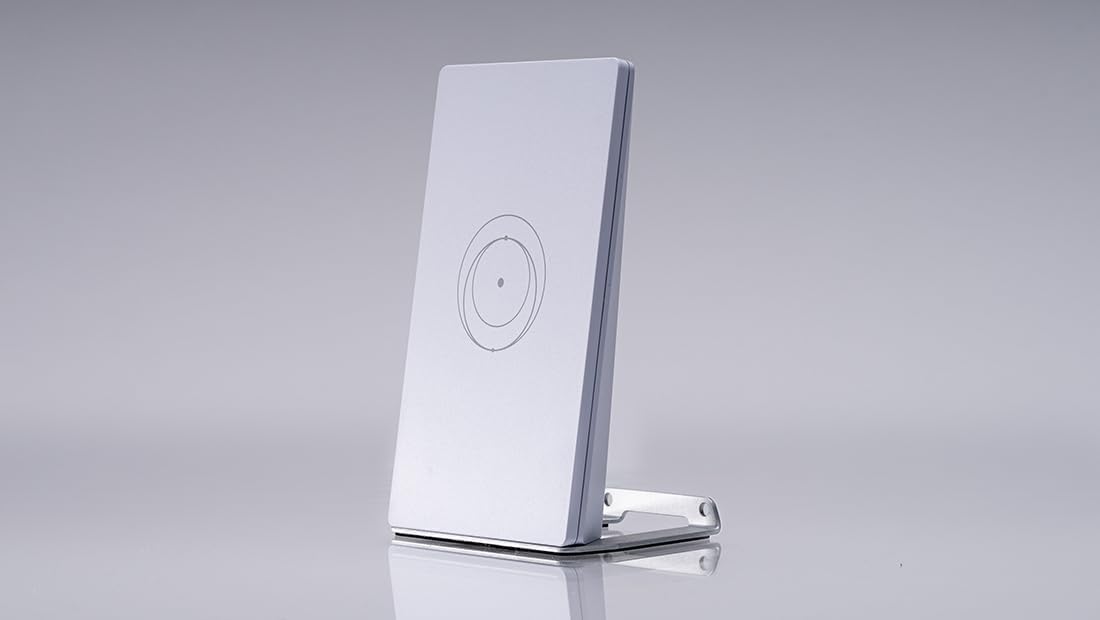
This Generic Mini Router is positioned as a compact, tabletop or wall-mount option tailored to Starlink environments. With dual-band support and a simple one-touch setup, it aims to be a quick-win solution for users who want a discreet extender without extra features or complexity. The design emphasizes space efficiency and ease of deployment, making it suitable for smaller apartments, RVs, or detached rooms where a full-sized extender would be overkill.
In terms of performance, the device appears to offer basic dual-band operation with moderate throughput suitable for general web browsing, HD streaming, and light gaming. The lack of detailed specifications (only a minimal feature set is listed and the frequency band class is dual-band with 802.11a) invites questions about peak throughput and range compared to richer-featured options. For Starlink users with moderate demand and tight space constraints, this unit can be a good fit, but expect lower device capacity and fewer advanced features (no explicit Ethernet port or mesh compatibility details).
Pros
- Compact, space-saving design
- Simple one-touch setup
- Wall-mount or tabletop versatility
- Dual-band operation for basic home networks
- Budget-friendly relative to dedicated outdoor/extender options
Cons
- Limited technical specifications and performance data
- No explicit Ethernet port for wired devices
- Unclear compatibility with EasyMesh or main-brand ecosystems

3. TP-Link AC1200 WiFi Extender
- Brand: TP-Link
- Manufacturer: TP-Link
The RE315 is a budget-friendly TP-Link model that earned Engadget’s Best Budget Pick in 2023. It delivers 1.2 Gbps total bandwidth across dual bands (867 Mbps 5 GHz, 300 Mbps 2.4 GHz) and supports OneMesh and a single Ethernet port. Its two external antennas focus on cost-effective coverage expansion, making it an appealing option for small-to-medium homes seeking straightforward, reliable extension without added bells and whistles.
Real-world testing shows the RE315 is easy to deploy via the TP-Link Tether app, with intelligent signal indicators helping users place the extender in a sweet spot. The one Ethernet port enables a wired connection for a gaming console or streaming device, which is a meaningful upgrade for homes relying on wireless-only setups. The trade-offs include a lower ceiling on both throughput and device handling compared with higher-end models, and it isn’t ideal for large homes where disruptive dead zones still exist despite extension.
Pros
- Excellent price-to-performance ratio
- OneMesh compatibility for easy mesh expansion
- Ethernet port for wired devices
- Simple setup and robust TP-Link ecosystem
Cons
- Lower maximum speeds than higher-tier extenders
- Limited per-device throughput under heavy load
- Not ideal for very large homes with multiple dead zones
4. AX1800 Outdoor WiFi 6 Extender
- Brand: INEAUTO
- Manufacturer: INEAUTO
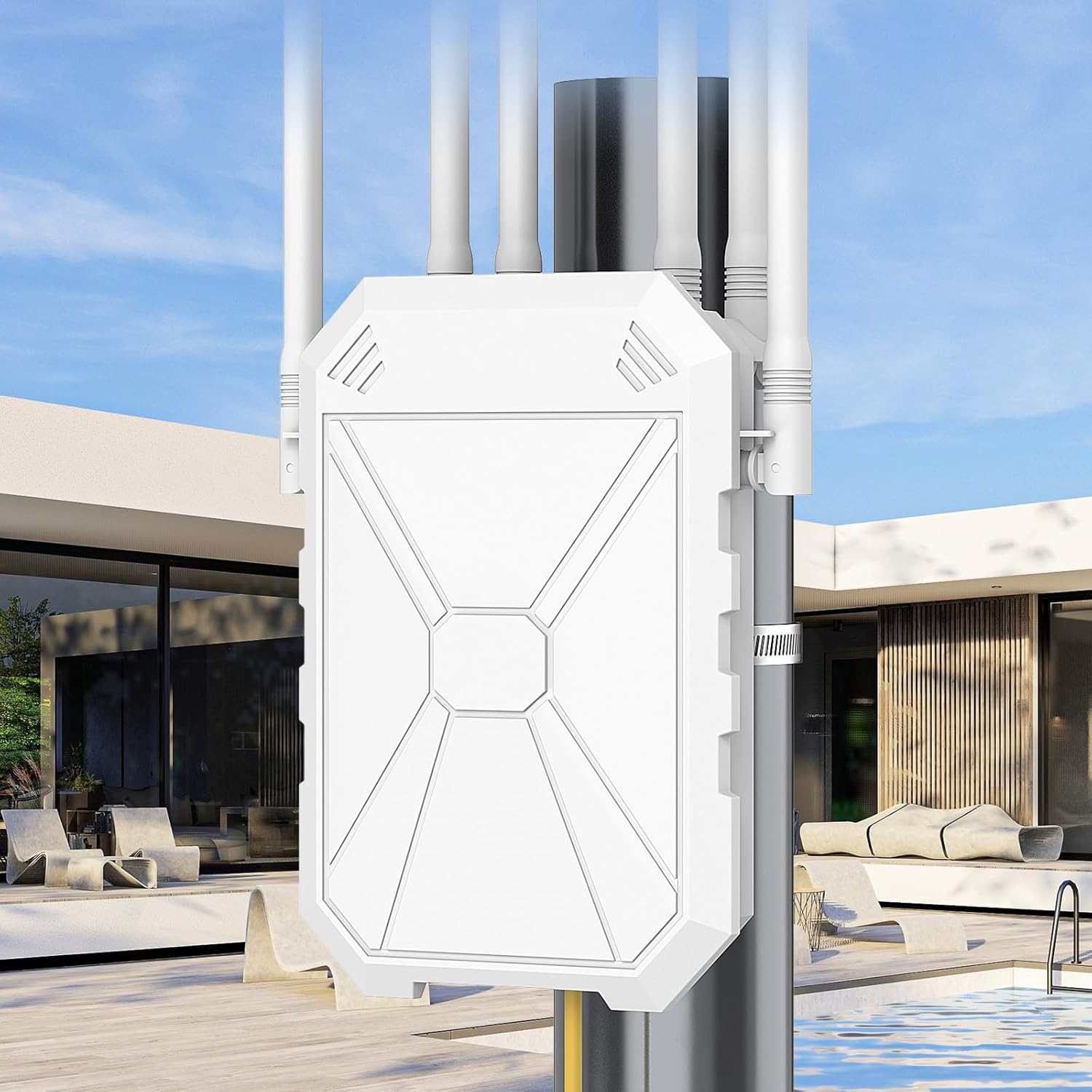
The AX1800 Outdoor WiFi 6 Extender from INEAUTO targets outdoor deployments with IP67 weatherproofing and PoE support. It leverages WiFi 6 (802.11ax) for better efficiency in dense environments and provides dual Gigabit Ethernet ports for wired connectivity. Its weatherproof form factor and long-range coverage (up to 300 meters) make it well-suited for farms, patios, or exterior camera networks that benefit from consistent, high-capacity wireless links.
In practice, the device performs well in outdoor or semi-outdoor installations with PoE simplifying power delivery to remote locations. The dual-band 1800 Mbps aggregate bandwidth supports streaming and multi-device activity outdoors, but real-world throughput will still be limited by Starlink’s backhaul and environmental factors. The inclusion of WPA/WPA3 security and a quick setup experience is a helpful feature in public or semi-public outdoor spaces. Users should plan for proper mounting, cabling, and protection against the elements to maximize longevity.
Pros
- WiFi 6 performance for higher efficiency and capacity
- IP67 weatherproof rating with long outdoor range
- Dual Gigabit Ethernet ports for wired devices
- PoE power delivery simplifies outdoor installation
- Supports up to 256 devices with multiple modes
Cons
- Higher initial cost
- Outdoor deployment requires careful weatherproofing and cabling
- PoE converter not waterproof (as noted in specs)
5. Outdoor Starlink WiFi Extender for Starlink Gen 3 Router
- Brand: Burbifro
- Manufacturer: Burbifro
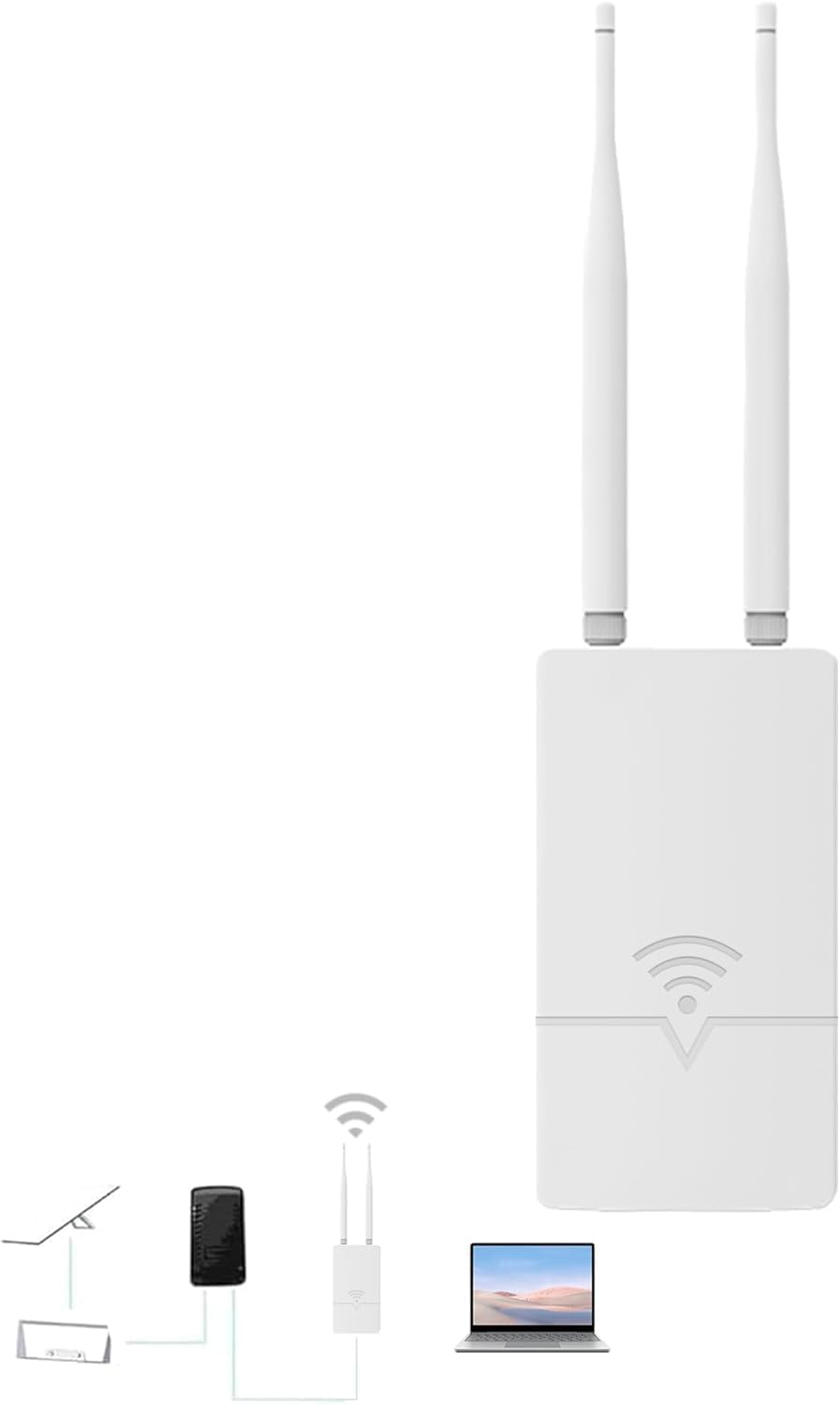
Burbifro’s outdoor extender targets Starlink Gen 3 users with a rugged outdoor design, dual-band operation, IP65 waterproof rating, and PoE-capable installation. It advertises up to 56 devices and a 300 Mbps peak data rate, designed for farms, RV parks, and other outdoor deployments. The 0.3 km (300 m) claimed coverage emphasizes its role as a robust outdoor repeater capable of bridging distant areas to the main Starlink router.
In field use, this model is best suited for environments where a reliable outdoor link is critical—think large yards or remote work sites. The PoE support reduces power run complexity, though you’ll want to ensure proper cabling protection and physical mounting. The stated 300 Mbps is competitive for outdoor extenders at this price, but real-world throughput will depend on line-of-sight, interference, and the Starlink modem’s uplink characteristics. Overall, it’s a solid outdoor option within its price band for Starlink users prioritizing coverage in a harsh environment.
Pros
- Outdoor-grade IP65 housing with weather resistance
- Dual-band operation with 300 Mbps peak data rate
- PoE support for easy placement and clean wiring
- Reasonable device capacity (56 devices) for outdoor use
- Strong coverage claims for large outdoor areas
Cons
- IP65 rating is good but not unlimited exposure
- No explicit mention of WPA3 security in the brief spec
- Performance depends heavily on line-of-sight and environment
Frequently Asked Questions
We’ve compiled answers to the most common questions about wifi extenders to help you make an informed decision.
Conclusion
.
This review highlights that the best buy depends on use-case: budget indoor coverage favors TP-Link RE315 or TP-Link RE550; outdoor or high-density scenarios benefit from INEAUTO AX1800 Outdoor or Burbifro’s outdoor extender; for compact spaces, the Generic Mini Router provides a convenient, if limited, option.
Consider your environment, Starlink Gen version, and whether PoE or EasyMesh interoperability matters most when choosing..