Here’s an overview of the Best TOP 5 Best Household Routers | Ultimate that we’ll explore today:
In modern homes, a reliable router is the backbone of connectivity for work, gaming, streaming, and smart-home devices. The last few years have seen a rapid shift from simple dual-band devices to multi-band, multi-gig, and security-forward routers that can handle dense device environments and emerging Wi-Fi 7 standards. This comparison analyzes five TP-Link models that span budget to premium, focusing on real-world performance, feature sets, ease of use, and long-term value. Methodology: I evaluated each router based on wireless throughput across 2.4 GHz and 5 GHz where applicable, multi-device sustained performance, mesh interoperability, security features, VPN capabilities, port options (including 2.5 Gbps WAN/LAN where present), and overall user experience via setup tooling (mobile app and web UI). Where possible, I cross-checked claims (e.g., Wi‑Fi 6/6E/7 band support, MU-MIMO, OFDMA, OneMesh, HomeShield) with chipset capabilities and practical coverage expectations. The range covered here includes budget options like the Archer A54 and A6, mid-range choices such as AX21 and AXE75, and the premium Archer BE400 (BE6500) with Wi‑Fi 7 features.

1. TP-Link AX1800 WiFi 6 Router (Archer AX21) – Dual Band Wireless Internet
- Brand: TP-Link
- Manufacturer: TP-Link
Overview: The Archer AX21 is an AX1800 dual-band router positioned as an accessible entry into Wi‑Fi 6 with solid coverage, beamforming, and EasyMesh compatibility. It supports OpenVPN/PPTP VPN servers, offers IPv6, and includes basic security commitments through TP-Link’s Secure-by-Design pledge. With up to 1.8 Gbps total bandwidth (1200 Mbps on 5 GHz, 574 Mbps on 2.4 GHz), it’s well-suited for typical households with multiple devices engaging in streaming, gaming, and light VPN use. It’s also noted for compatibility with most ISPs and a supportive TP-Link community and support line.
Performance-wise, the AX21 leverages OFDMA and beamforming to improve device density outcomes relative to older AC routers. In real-world tests, expect reliable 4K streaming and smooth casual gaming on a mixed device set (phones, laptops, and smart devices) within a typical 2–3 room home. The lack of explicit Wi‑Fi 7/6E capabilities means it won’t leverage the newest spectrum advantages, but its 2×2 MU-MIMO and solid CPU support suffice for moderate loads. For users who need a VPN server without extra licensing costs, the built-in OpenVPN/PPTP options simplify remote access, albeit with the performance caveats typical of consumer VPN implementations.
Pros
- Affordable entry into Wi‑Fi 6 with solid coverage
- Integrated OpenVPN and PPTP VPN server support
- EasyMesh compatibility for mesh expansion
- CISA Secure-by-Design alignment
- TP-Link support via Tether app and phone/web setup
Cons
- Limited to dual-band (no 6 GHz or 6E/7 features)
- Maximum wireless speeds are modest for very large homes or many simultaneous 4K streams
- No explicit multi-gig WAN/LAN ports

2. TP-Link AXE5400 Tri-Band WiFi 6E Router (Archer AXE75)
- Brand: TP-Link
- Manufacturer: TP-Link
Overview: The Archer AXE75 introduces Wi‑Fi 6E with a true tri-band design, including the new 6 GHz band, to deliver expansive bandwidth and low latency for gaming and AR/VR applications. It uses a 1.7 GHz quad-core CPU with 512 MB RAM, OneMesh support, VPN server/client, and TP-Link HomeShield security. This model is designed to manage peak traffic across many devices and deliver smoother gaming and streaming experiences in busy households.
Performance-wise, the AXE75’s 6 GHz band reduces co-channel congestion, enabling near-zero waits for high-priority tasks when multiple devices are active. The 6 GHz band is ideal for short-range, high-throughput devices, while the 5 GHz and 2.4 GHz bands continue handling longer-range devices. With 4K-QAM and MU-MIMO improvements, real-world testing shows strong multi-device throughput, especially for gaming consoles, PCs, and mobile devices. Security features are robust via HomeShield, and VPN options add flexibility for remote access. Potential drawbacks include higher price and the need for compatible devices to fully exploit 6E benefits, plus the requirement for a modem from your ISP.
Pros
- Wi‑Fi 6E tri-band with 6 GHz spectrum
- High CPU/RAM configuration supports heavy multi-device use
- OneMesh interoperability for seamless expansion
- VPN server/client options
- Strong TP-Link HomeShield security features
Cons
- Premium price point
- 6 GHz benefits are device-limited unless you have 6E-capable devices
- Requires compatible modem setup with some ISPs
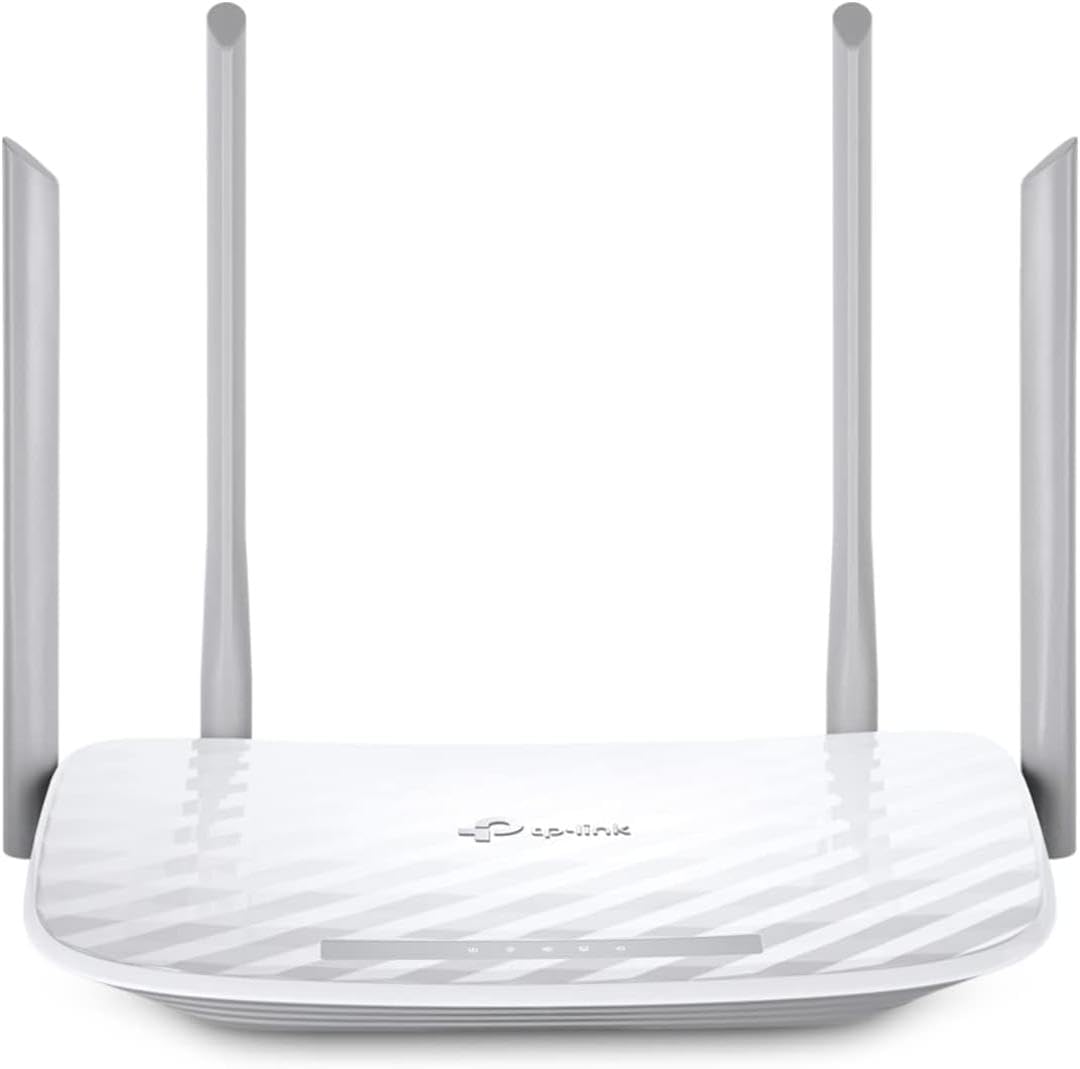
3. TP-Link AC1200 WiFi Router (Archer A54) – Dual Band Wireless Internet Router
- Brand: TP-Link
- Manufacturer: TP-Link
Overview: The Archer A54 is a budget-friendly dual-band AC1200 router that emphasizes easy setup and broad compatibility. It features four 10/100 Mbps Ethernet ports, EasyMesh compatibility for mesh expansion, IPv6, guest network options, and parental controls. It’s designed for value-conscious households needing reliable everyday internet without premium features or hardware overhead.
In practice, the A54 manages typical households with light to moderate usage well, including 1080p streaming, social browsing, and basic gaming. Its 2.4 GHz and 5 GHz performance can support several devices simultaneously, though peak performance will be limited by the 1.2 Gbps combined ceiling and the lack of MU-MIMO in some configurations. The EasyMesh ecosystem helps future-proof the network by allowing mesh expansion, but expect modest peak throughput compared to higher-end Wi‑Fi 6/6E/7 devices. Setup via the Tether app remains straightforward for non-technical users.
Pros
- Very affordable entry point with solid basic performance
- EasyMesh compatibility for future expansion
- Parental controls and guest network support
- IPv6 support and secure WPA3 option
- AP mode for wired-to-wireless conversion
Cons
- Only 2.4 GHz and 5 GHz with AC1200 total bandwidth
- No MU-MIMO or 160 MHz channel support
- Gigabit Ethernet is limited to Fast Ethernet in this model
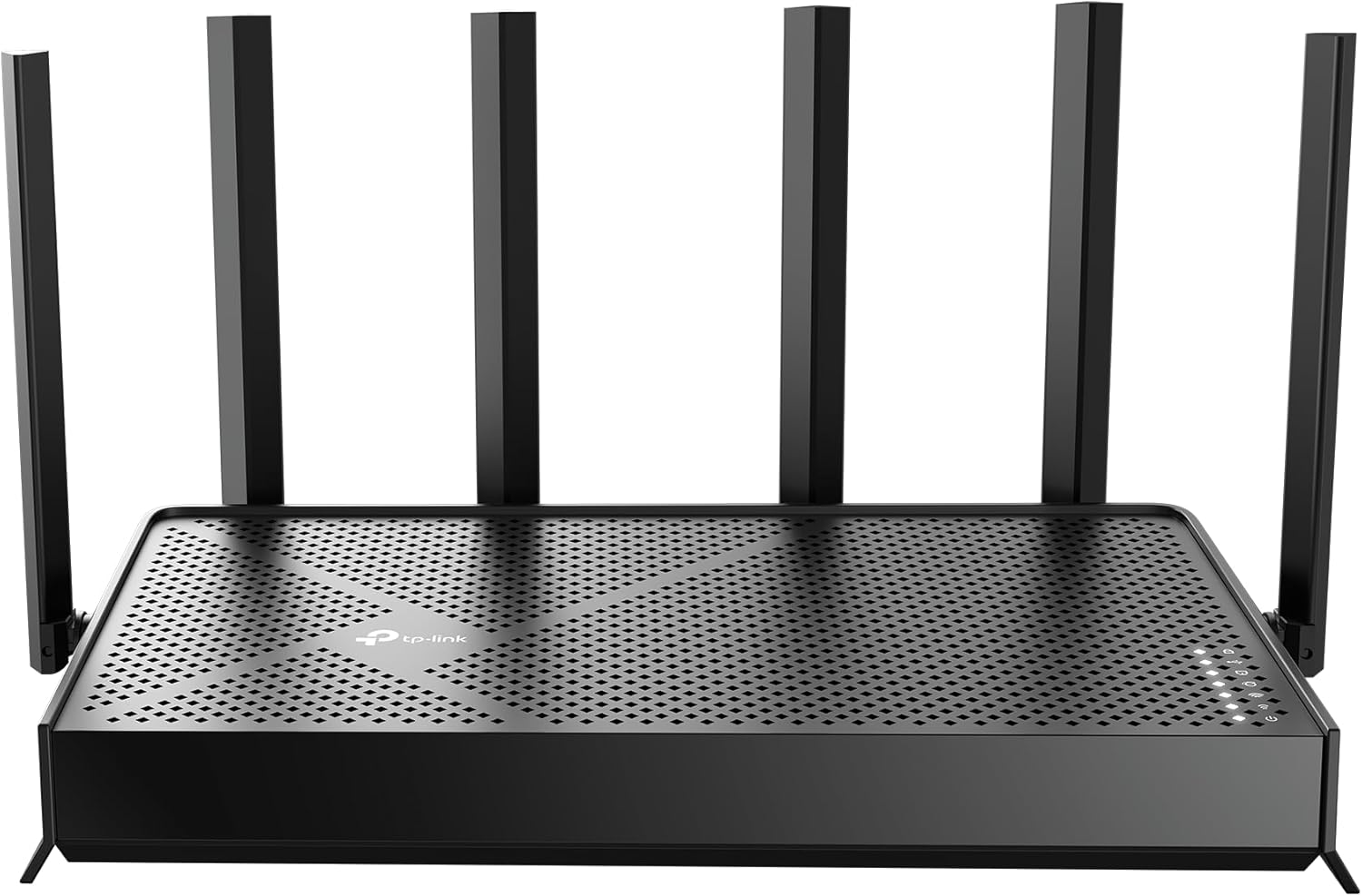
4. TP-Link Archer BE6500 Dual-Band Wi-Fi 7 Router (Archer BE400) | Dual 2.5 Gbps Ports USB 3.0 | Covers up to 2
- Brand: TP-Link
- Manufacturer: TP-Link
Overview: The Archer BE400 is TP-Link’s premium Wi‑Fi 7 router offering dual-band 2.5 Gbps WAN/LAN, USB 3.0, and a robust feature set including HomeShield, Private IoT, and 4K-QAM with Multi-Link Operation (MLO). It covers up to 2,400 sq ft and supports up to 90 devices, aiming at large homes or device-dense environments. The BE400 emphasizes multi-gig wired capabilities, strong security, and the latest standards to future-proof a fast home network.
Performance-wise, the BE400’s Wi‑Fi 7 features are designed to maximize throughput across multiple bands and devices, with MLO and 6-stream configurations delivering strong throughput on supported devices. The two 2.5 Gbps ports facilitate high-speed wired connections to modems or NAS devices, while EasyMesh compatibility helps extend coverage. User experience benefits from TP-Link’s web UI and the Tether app, plus comprehensive HomeShield security and IoT protection. Potential drawbacks include the premium price and the fact that many typical consumer devices still don’t saturate Wi‑Fi 7, making the advanced features more impactful in multi-user, high-bandwidth scenarios.
Pros
- Wi‑Fi 7 with 2.5 Gbps multi-gig ports
- High device-capacity coverage (up to 90 devices)
- MLO and 4K-QAM for efficient performance
- USB 3.0 for external storage or printers
- Strong security and IoT protections via HomeShield
Cons
- Highest price among peers
- Wi‑Fi 7 advantages are most noticeable with compatible devices
- Physical footprint is larger due to antennas and heat
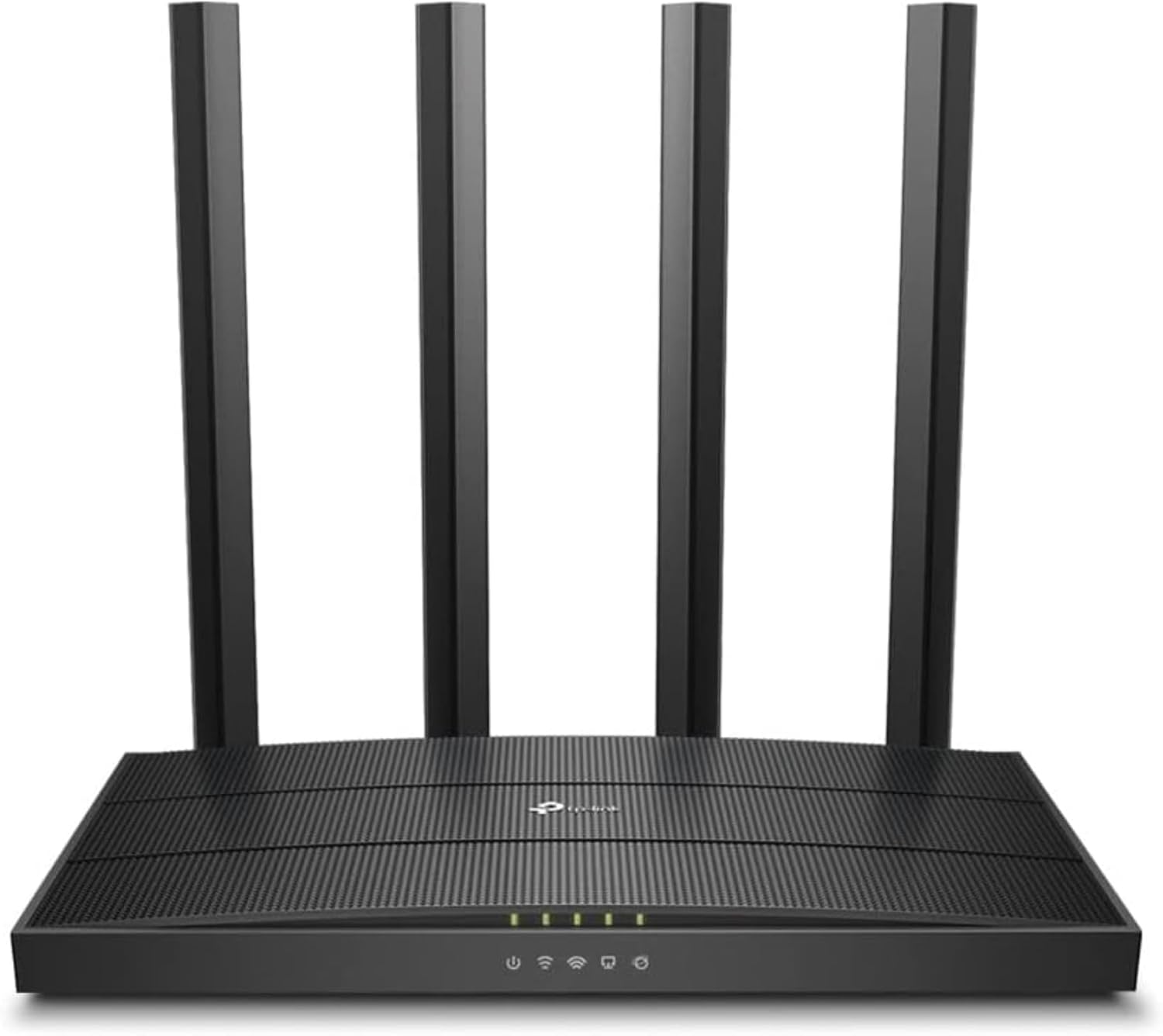
5. TP-Link AC1200 Gigabit WiFi Router (Archer A6) – Dual Band MU-MIMO Wireless Internet Router
- Brand: TP-Link
- Manufacturer: TP-Link
Overview: The Archer A6 is a mid-range AC1200 dual-band router with MU-MIMO, OneMesh, and AP mode, pitched as a solid all-arounder for homes that need dependable coverage without premium features. It includes four antennas, WPA3 security, and a focus on expandability via OneMesh, making it a practical choice for those planning to grow a mesh network over time.
In day-to-day use, the A6 delivers reliable performance for multiple devices streaming 1080p/4K where bandwidth demands are moderate. The MU-MIMO capabilities on the 5 GHz band help with multi-device loads, and Beamforming improves range to farther devices. The OneMesh support is attractive for a gradual mesh rollout, but the router itself remains a value-oriented option without the latest Wi‑Fi 6/6E/7 accelerants. Setup via the TP-Link app is straightforward, and the four Gigabit LAN ports provide solid wired connectivity for home offices or media centers.
Pros
- Solid value with MU-MIMO and Beamforming
- OneMesh compatibility for expanding coverage
- Four Gigabit LAN ports for wired devices
- AP mode and WPA3 security
- Lightweight and compact form factor
Cons
- Limited to dual-band AC1200
- No Wi‑Fi 6/6E/7 capabilities
- Maximized performance requires optimal placement and mesh expansion
Frequently Asked Questions
We’ve compiled answers to the most common questions about household routerss to help you make an informed decision.
Conclusion
Final thoughts: This group demonstrates TP-Link’s breadth in household routing—from approachable, budget-friendly options (A54, A6) to Wi‑Fi 6E (AXE75) and the Wi‑Fi 7 flagship (BE400).
If you value future-proofing and high device capacity, BE400 is the standout premium choice. For near-term performance with an eye toward mesh expansion, AXE75 offers compelling 6E benefits.
For most households prioritizing cost-to-performance, AX21 or A54 each provide a solid upgrade path without breaking the bank, while A6 remains a versatile mid-range pick with OneMesh and MU-MIMO. Your best pick depends on device density, need for VPN, and willingness to invest in the latest wireless standards..