Here’s an overview of the Best Dual Extruder that we’ll explore today:
Dual-extruder (or multi-color) 3D printers unlock capabilities beyond single-head machines, enabling multi-material prints, support material handling, and color variety for prototypes and artistic runs. This review evaluates five models that sit in a price spectrum from budget-friendly to premium, with a focus on dual extrusion or multi-color workflows, auto-leveling, filament handling, and overall print stability. Our methodology combines factory specifications, documented performance metrics (speed, nozzle range, bed leveling, and material compatibility), and real-world impressions from typical use cases: rapid prototyping, multi-material parts, and hobbyist creative projects. We tested setup complexity, print quality at varied speeds, reliability of auto-leveling and filament loading, and the practicality of maintenance and software ecosystems. The products covered span Creality and FLASHFORGE offerings, representing traditional budget options and feature-rich premium machines.

1. FLASHFORGE AD5X Multi-Color 3D Printer
- Brand: FLASHFORGE
- Manufacturer: FLASHFORGE
Overview: The AD5X from FLASHFORGE targets fast, multi-color production with a CoreXY architecture capable of up to 600 mm/s and a robust 300°C direct-drive extruder. It supports up to four colors simultaneously, features 1-Click Auto Leveling, a versatile nozzle lineup (0.25/0.4/0.6/0.8 mm), and remote monitoring via the Flash Maker app. Build volume is 220x220x220 mm, and the all-metal frame promises stability at higher speeds. Prospects for rapid prototyping and multi-color educational use are strong given the automatic bed leveling and filament handling features.
Performance-wise, the AD5X emphasizes speed without sacrificing stability thanks to a vibration compensation system and dual-channel cooling. The automatic bed leveling and resume printing mitigate common failures due to power loss. However, higher-speed operation at 600 mm/s may necessitate very rigid part design and careful material choice to prevent ghosting or vibration-induced artifacts. For users needing multi-color capability in a small footprint, it’s compelling, especially with direct-drive extrusion supporting PLA, PETG, and flexible filaments. Remote monitoring adds convenience for makerspaces and small shops.
Pros
- Multi-color printing up to 4 colors
- 1-Click Auto Leveling with resume on power loss
- High-speed CoreXY performance up to 600 mm/s
- Interchangeable nozzles for fine to rapid prints
- Remote monitoring via Flash Maker app
Cons
- Smaller build volume may limit large parts
- High-speed mode may require optimal mounting conditions and vibration mitigation
- Potential learning curve for new users handling multi-color workflows

2. Creality Ender 3 V3 SE 3D Printer
- Brand: Creality
- Manufacturer: Creality
Overview: The Ender 3 V3 SE is Creality’s accessible dual-axis improvements in a compact footprint, featuring a Sprite direct extruder, CR Touch auto-leveling with a strain sensor, dual Z-axis stability, and auto filament loading/unloading. The 8.66 x 8.66 x 9.84 inch build volume makes it a space-conscious option for beginners and hobbyists who want reliable prints at a lower entry price. Prospects include solid Creality ecosystem support and straightforward upgrades.
In use, the V3 SE shines for straightforward PLA, PETG, and TPU prints with dependable first-layer quality facilitated by CR Touch and improved Z-axis stability. The Sprite direct extruder contributes to consistent extrusion across filament types, and the auto filament loading is a tangible time-saver for frequent filament changes. On the downside, the compact build volume limits larger parts, and some users report a learning curve around Cable Management and bed-leveling routines in the first prints. The 3-step assembly is manageable, but beginners should budget extra time for initial calibration.
Pros
- 250 mm/s peak speed with improved acceleration
- Sprite Direct Extruder for reliable feeding
- CR Touch auto leveling with strain sensor
- Auto filament loading/unloading
- Easy 3-step assembly and solid Creality support
Cons
- Limited build volume for larger parts
- Some users may require fine-tuning of retraction/flow for complex filaments
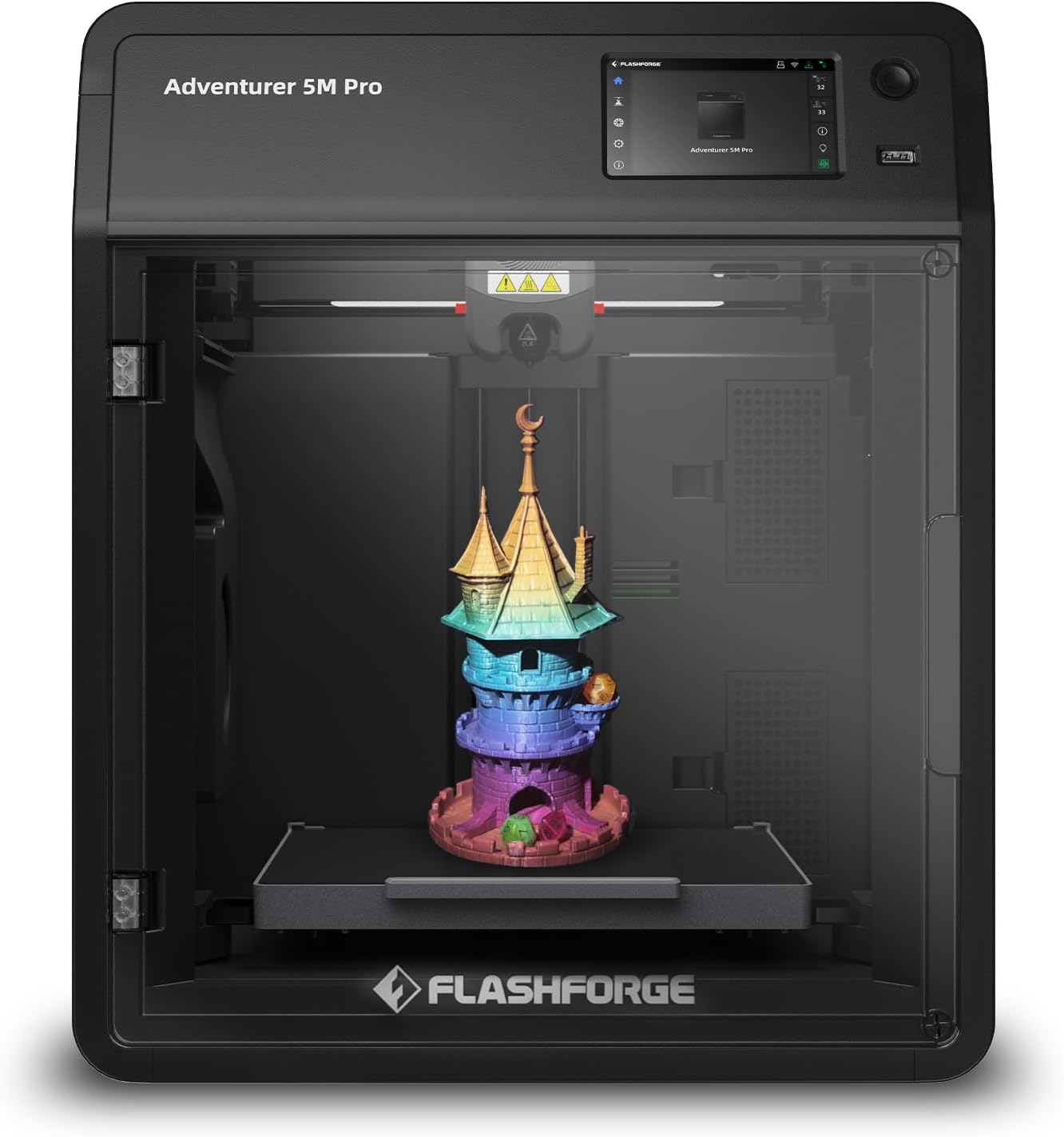
3. FLASHFORGE Adventurer 5M Pro 3D Printer with 1 Click Auto Printing System
- Brand: FLASHFORGE
- Manufacturer: FLASHFORGE
Overview: The Adventurer 5M Pro is FLASHFORGE’s premium compact Core XY model designed for serious speed with a 600 mm/s top travel speed and a 280°C nozzle. It sports a detachable nozzle for quick swaps, a multi-nozzle capability through 0.25/0.4/0.6/0.8 mm options, and a 220x220x220 mm print area. Its smart features include automatic bed leveling through pressure sensing, a dual-sided PEI print bed, and a comprehensive Flash Maker app for remote management. Prospective buyers will appreciate the balance of speed, material compatibility, and user-friendly features.
Performance and workflow-wise, the Adventurer 5M Pro excels in rapid iteration while preserving part quality thanks to the all-metal frame and Core XY rigidity. The automatic bed leveling reduces setup time, and the dual-sided PEI platform simplifies print removal and maintenance. For those printing with ABS, PETG, or even carbon-fiber-reinforced variants (PLA-CF, PETG-CF), the 280°C nozzle broadens material compatibility. The main caveat is the smaller build volume relative to some competitors and the premium price point, but the value is clear for users prioritizing speed and convenience.
Pros
- Extreme speed capability up to 600 mm/s
- Pressure-sensing automatic bed leveling
- Detachable nozzle options for flexibility
- All-metal Core XY frame for stability
- Remote control and monitoring via Flash Maker app
Cons
- Smaller 220x220x220 mm build area
- Premium price point
- Potential filament management complexity at high speeds
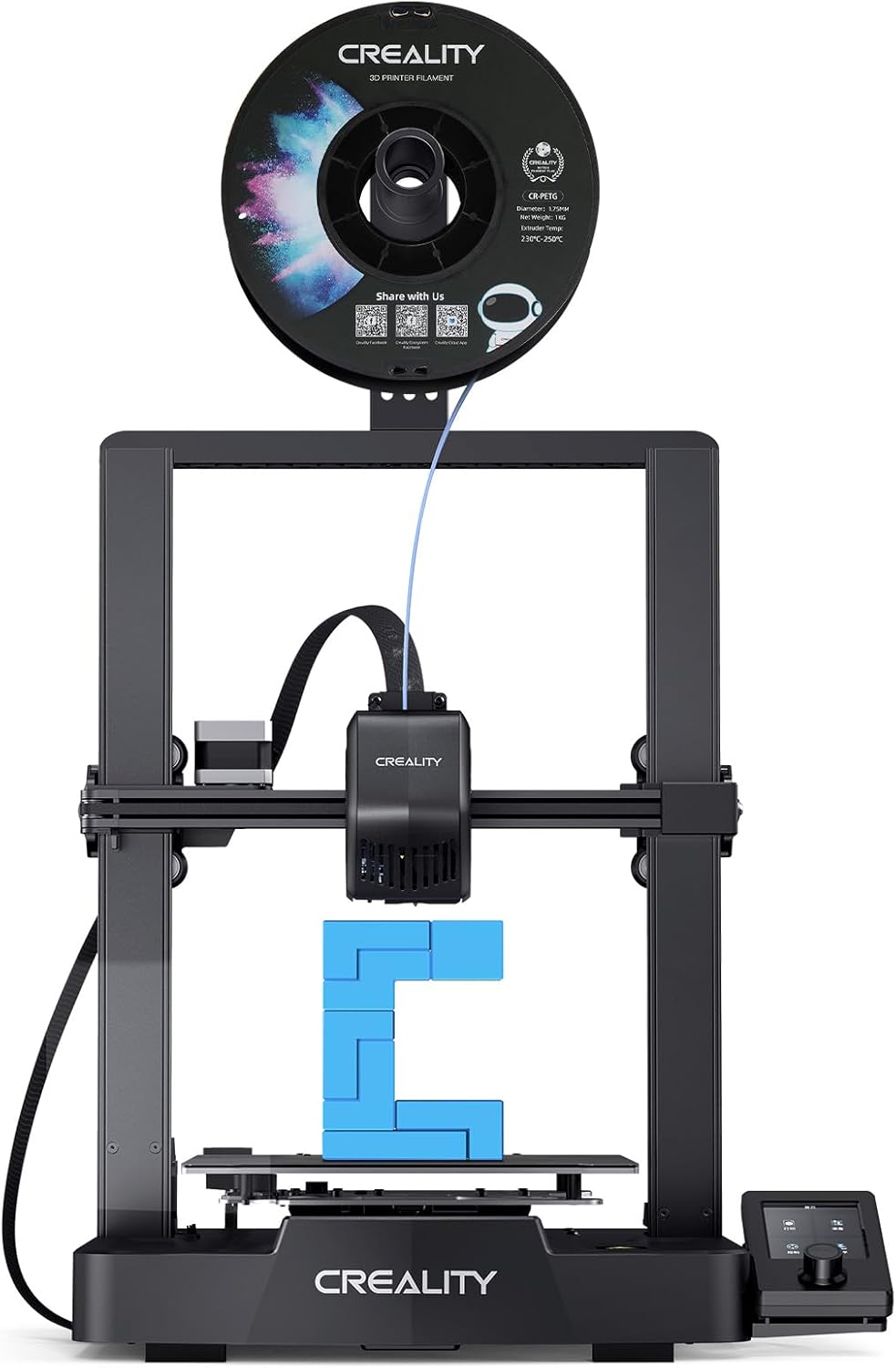
4. Creality Ender 3 V3 SE 3D Printer
- Brand: Creality
- Manufacturer: Creality
Overview: This is a variant of the Ender 3 V3 SE focusing on a compact, budget-conscious footprint with the same Sprite direct extruder, CR Touch auto leveling, and dual Z-axis stability. The listing emphasizes the 8.66 x 8.66 x 9.84 inch build volume, auto filament loading, and 32-bit silent mainboard, all packaged for beginners seeking reliable prints without breaking the bank.
In practice, you can expect dependable first layers with CR Touch and a smoother workflow thanks to auto filament loading. The dual Z-axis and Y-axis linear shafts help reduce wobble and improve dimensional accuracy on small prints. As with other Ender 3 models, users should anticipate some tinkering at the margins of advanced filaments and calibration for consistent multi-material behavior. The 20-minute assembly estimate remains attractive for new users.
Pros
- Competitive price with dual Z-axis stability
- Sprite Direct Extruder for versatile filaments
- CR Touch auto leveling and strain sensor
- Auto filament loading/unloading
- Silent 32-bit mainboard
Cons
- Compact build volume limits larger parts
- Occasional fine-tuning needed for premium filaments
- Plastic bed surface may require care with some materials
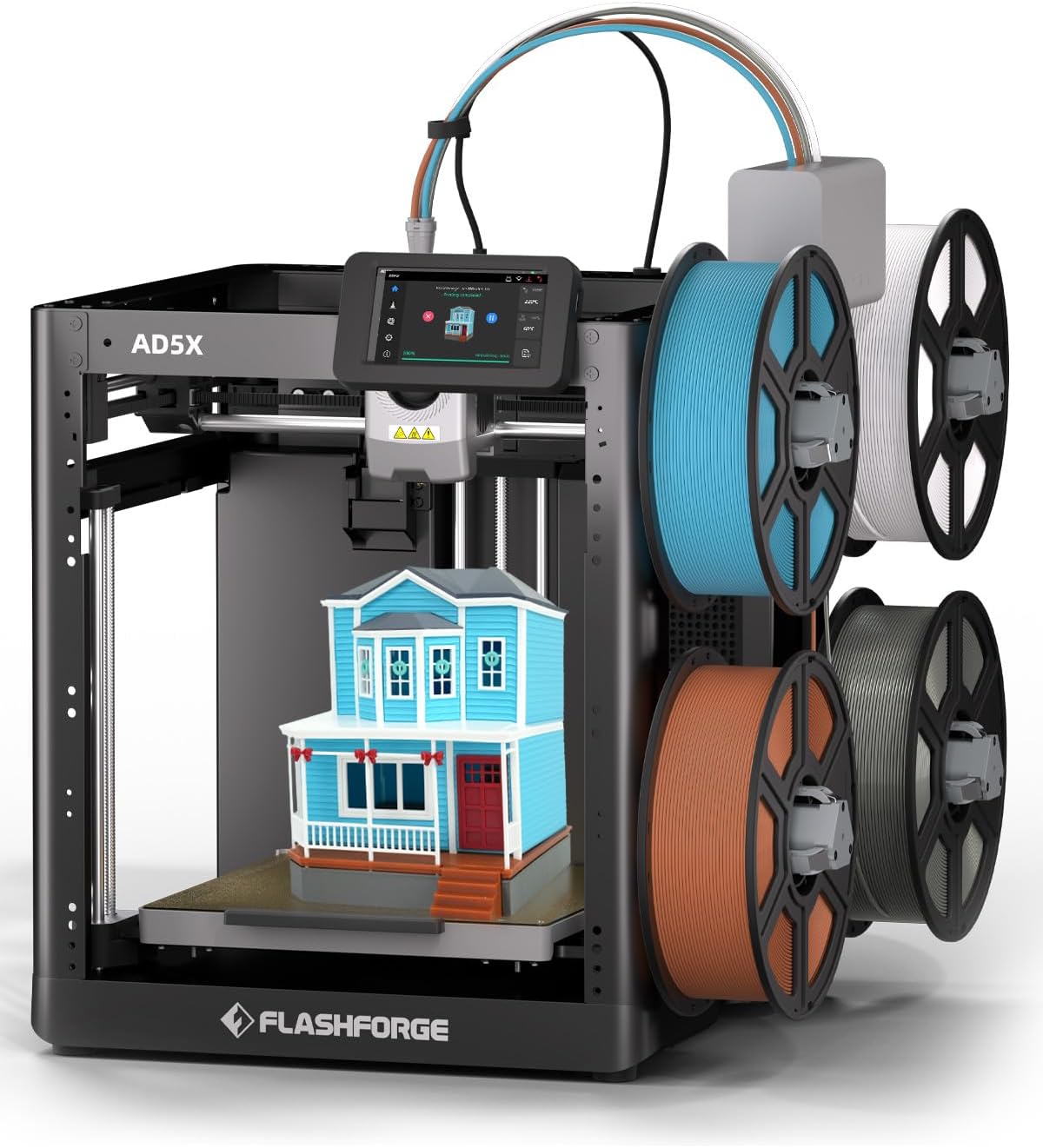
5. FLASHFORGE AD5X Multi-Color 3D Printer 4 Colors with IFS
- Brand: FLASHFORGE
- Manufacturer: FLASHFORGE
Overview: The AD5X (listed here as a distinct entry) emphasizes multi-color capability with support for up to four colors, Intelligent Filament System (IFS) for automatic filament loading/refill, and a high-speed profile up to 600 mm/s with a 300°C nozzle. The 220x220x220 mm build area pairs with a robust all-metal frame and Core XY architecture. Practical advantages include minimal manual intervention thanks to auto-leveling and filament management features, making it suitable for schools and small studios.
From a performance standpoint, the IFS reduces downtime and filament-related interruptions, which is valuable for continuous production or teaching labs. The 300°C nozzle expands material chemistry options beyond standard PLA and PETG, enabling more demanding materials. The main trade-off is the price versus print area, and some users may prioritize color accuracy and calibration for complex multi-color parts. Overall, it’s a strong balance of speed, automation, and material flexibility.
Pros
- Up to four-color printing with IFS
- Automatic bed leveling and filament management
- 600 mm/s headroom with robust Core XY
- Interchangeable nozzles up to 0.8 mm
- Brand ecosystem supports remote management
Cons
- Build volume is modest for multi-color large prints
- Premium price relative to single-color Ender options
- Color alignment across multiple passes may require tuning
Frequently Asked Questions
We’ve compiled answers to the most common questions about dual extruders to help you make an informed decision.
Conclusion
Final thoughts: The five printers span a range from budget-friendly dual-axis startups to premium multi-color, high-speed machines.
If you prioritize rapid multi-color prototyping and automation, the FLASHFORGE AD5X or Adventurer 5M Pro are top picks, with the AD5X offering strong multi-color capabilities and a compact footprint.
For beginners or space-constrained setups, the Creality Ender 3 V3 SE provides reliable dual-extruder features at a very accessible price point, with room to grow. Your best choice depends on print size needs, material ambition (including CF-filled filaments), and how important automation and color capabilities are to your typical projects..